
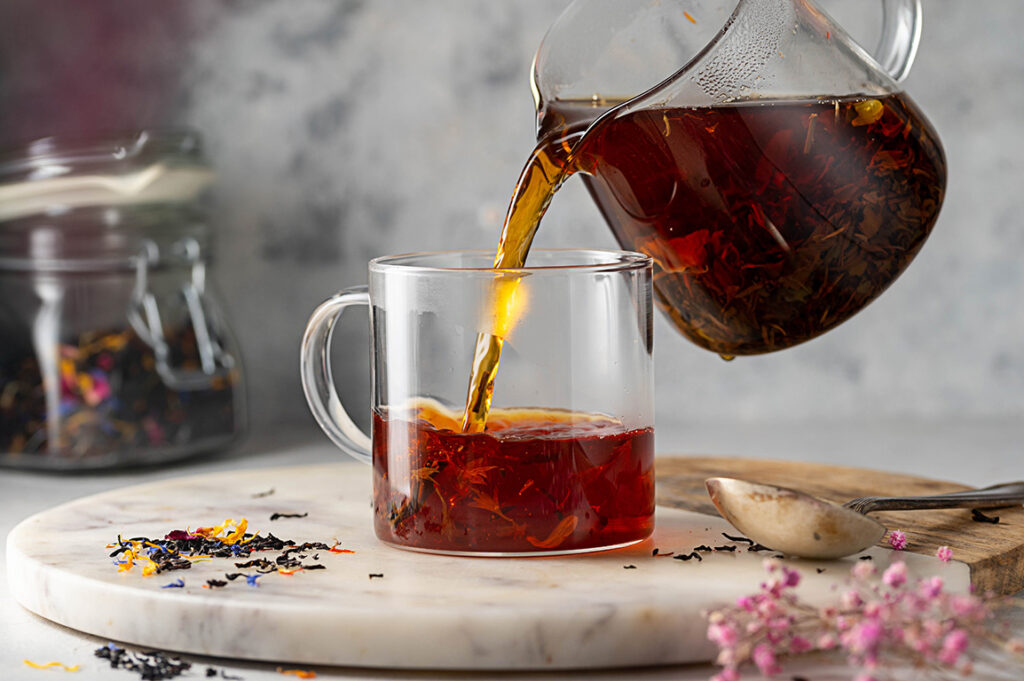
Black tea is made from the leaves of the tea plant, Camellia sinensis. It comes from the same plant as white, green and oolong tea but is allowed to oxidize more extensively during processing.
The brewed tea is not literally black. Depending on the variety and strength, it may appear copper, reddish amber, chestnut or deep mahogany. In China and some other parts of Asia, black tea is often called “red tea” because of the color of the brewed liquid.
How Black Tea Is Made
After harvesting, the leaves are withered to reduce moisture and make them pliable. They are then rolled, twisted or crushed, breaking open the leaf cells and exposing their compounds to oxygen.
The leaves are allowed to oxidize until the desired color, aroma and flavor develop. Heat is then applied to stop oxidation and dry the tea for storage.
Black tea production is sometimes described as fermentation, but traditional black tea is primarily created through enzymatic oxidation rather than microbial fermentation.
Processing methods, tea cultivars and growing regions produce a wide range of styles. Black tea may taste malty, brisk, fruity, floral, smoky, woody, honeyed or lightly astringent. Familiar varieties and blends include Assam, Darjeeling, Ceylon, Keemun, English Breakfast and Earl Grey.
Bioactive Compounds & Research
Black tea contains polyphenols, caffeine and the amino acid L-theanine. During oxidation, many of the catechins found in fresh tea leaves are transformed into other polyphenols, particularly theaflavins and thearubigins.
These compounds contribute to the tea’s reddish color, strength and characteristic flavor. Black tea still contains some catechins, but its polyphenol profile differs from that of less-oxidized green and white teas.
Research has explored black tea and its compounds in relation to cardiovascular health, metabolism and other areas. However, findings from laboratory studies or concentrated extracts do not establish that drinking black tea will prevent or treat disease. For a deeper look at how harvesting and processing shape black tea’s chemistry, flavor and quality, see scientific review of black tea production.
Brewing & Considerations
Black tea is commonly brewed with hot or near-boiling water. A steep of approximately three to five minutes is typical, although the best preparation depends on the variety and personal preference. Longer steeping generally creates a stronger, more astringent cup.
Black tea can be enjoyed plain or served with milk, lemon, honey or spices. It is also commonly used in iced tea and blended teas.
Black tea naturally contains caffeine. The amount in a cup varies with the tea, serving size, water temperature and steeping time. Its caffeine content cannot be determined by color or strength alone.
People who are sensitive to caffeine may prefer a smaller serving, shorter steeping time, decaffeinated black tea or a naturally caffeine-free herbal infusion.
Related Terms
Related glossary entries include Green Tea, White Tea, Oolong Tea, Jasmine Tea, Matcha, Polyphenol and Antioxidant.
A Note on Wellness Language
Wellness terms can change over time and may be used differently across scientific, traditional and commercial settings. Our goal is to explain them clearly, distinguish historical meaning from modern marketing, and give enough context for you to make sense of the language you encounter.
A Note on Educational Information
The information in this glossary is provided for educational purposes only. It is intended to explain terminology and provide context, not to diagnose, treat, cure or prevent disease, or replace advice from a qualified healthcare professional.
Return to the Herbal & Wellness Glossary
Return to the Herbal & Wellness Glossary to explore more terms, preparation methods and wellness concepts used throughout the site.
Deeply oxidized. Richly colored. Bold in the cup.🍵