
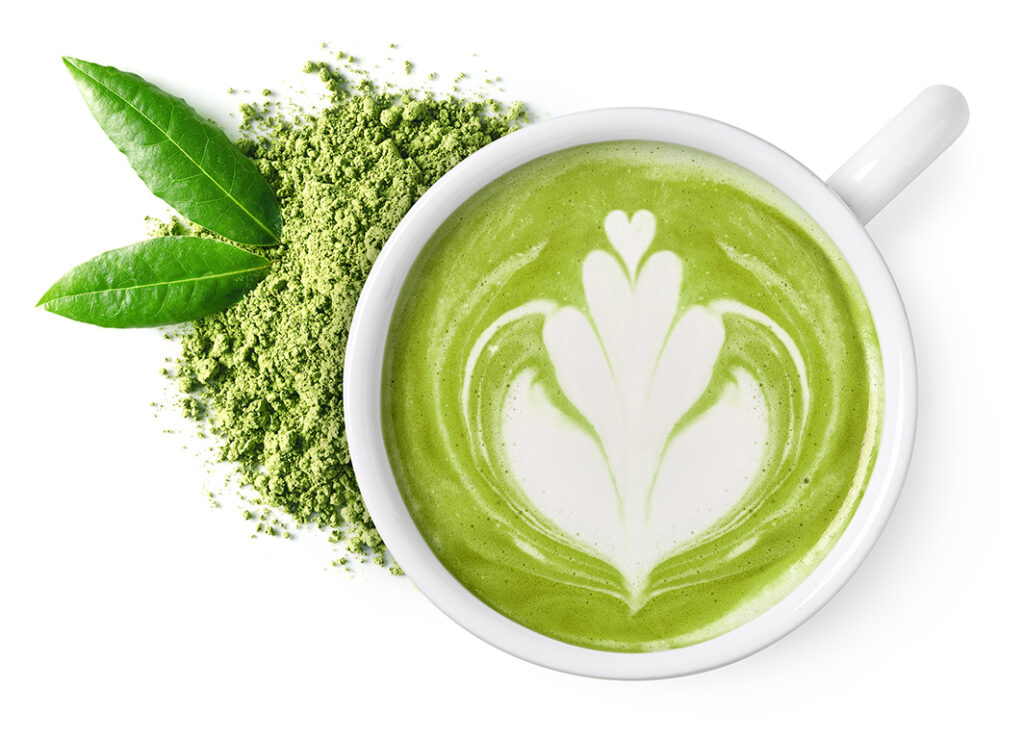
Matcha is a finely powdered Japanese green tea made from the leaves of Camellia sinensis. Unlike ordinary steeped tea, the powder is whisked into water and consumed as part of the drink.
Authentic matcha is produced from tencha—shade-grown tea leaves that are steamed, dried and ground into a very fine, vibrant green powder. Its flavor may be grassy, vegetal, creamy or slightly sweet, with a savory quality known as umami.
How Matcha Is Made
Several weeks before harvest, tea plants intended for matcha production are shaded from direct sunlight. Shading changes the developing leaves, generally increasing chlorophyll and L-theanine while influencing their catechin content. This contributes to matcha’s deep green color and characteristic balance of sweetness, savoriness and astringency.
After harvesting, the leaves are steamed to limit oxidation and preserve their green color. They are then dried without the rolling process commonly used for other green teas. Stems and prominent veins are removed, producing the leaf material known as tencha.
The tencha is finely ground—traditionally with stone mills—to produce matcha. Ordinary powdered green tea may be made by grinding other types of finished green tea, so not every package labeled “green tea powder” is necessarily matcha.
Bioactive Compounds & Research
Matcha contains polyphenols, including catechins such as epigallocatechin gallate, commonly abbreviated EGCG. It also contains caffeine, L-theanine, chlorophyll and other naturally occurring tea compounds.
Because the powdered leaf is consumed rather than removed after steeping, matcha generally provides more leaf material per serving than an infusion of green tea. That does not mean every compound is completely absorbed or that matcha automatically provides a particular health effect.
Research has examined matcha and its compounds in relation to attention, stress, metabolism and cardiovascular health. Evidence from laboratory studies, animal research or concentrated extracts cannot by itself establish that drinking matcha prevents or treats disease.
Matcha’s chlorophyll content is sometimes used to support “detox” claims, but its green color does not demonstrate that it removes toxins from the body. Matcha prepared as a beverage should also not be confused with highly concentrated green tea extract supplements.
For a closer look at its cultivation, chemical composition and areas of research, see this scientific review of matcha green tea.
Preparation & Considerations
Matcha is traditionally prepared by sifting a small amount of powder into a bowl, adding hot—but not boiling—water and whisking until evenly suspended and lightly frothy. It may also be used in lattes, smoothies and foods.
Because matcha does not fully dissolve, some powder may settle if the drink is left standing. This is normal and can be corrected by stirring or whisking again.
Matcha naturally contains caffeine and may provide more caffeine per serving than some steeped green teas. The amount depends on the product and quantity of powder used. Its caffeine content is not canceled out by the presence of L-theanine.
People who are sensitive to caffeine may prefer a smaller serving or avoid drinking matcha late in the day. The concentrated flavor and suspended leaf material may also feel harsh on an empty stomach for some people.
Related Terms
Related glossary entries include Green Tea, White Tea, Oolong Tea, Black Tea, Jasmine Tea, Polyphenol and Antioxidant.
A Note on Wellness Language
Wellness terms can change over time and may be used differently across scientific, traditional and commercial settings. Our goal is to explain them clearly, distinguish historical meaning from modern marketing, and give enough context for you to make sense of the language you encounter.
A Note on Educational Information
The information in this glossary is provided for educational purposes only. It is intended to explain terminology and provide context, not to diagnose, treat, cure or prevent disease, or replace advice from a qualified healthcare professional.
Return to the Herbal & Wellness Glossary
Return to the Herbal & Wellness Glossary to explore more terms, preparation methods and wellness concepts used throughout the site.
Shade-grown. Stone-ground. Whisked into a vibrant green cup.🍵