
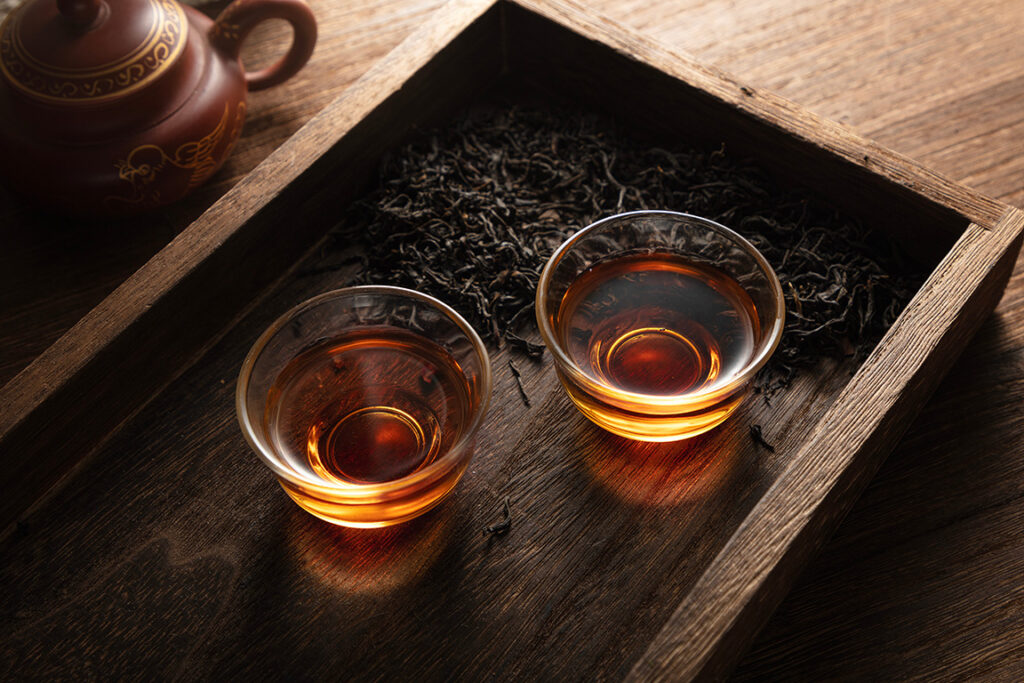
Oolong tea is made from the leaves of the tea plant, Camellia sinensis. It comes from the same plant as white, green and black tea but is distinguished by partial oxidation during processing.
Oolong is not a single flavor or color. Lightly oxidized varieties may produce pale gold or yellow-green tea with fresh floral notes, while more heavily oxidized or roasted varieties may be amber, copper or reddish-brown with richer, toastier flavors.
How Oolong Tea Is Made
After harvesting, the leaves are withered to reduce their moisture. They may then be gently shaken, rolled or bruised, exposing parts of the leaf to oxygen and beginning enzymatic oxidation.
The tea maker stops this process with heat when the desired aroma, flavor and color have developed. The leaves are then rolled or shaped and dried. Some oolongs are also roasted, which can add warm, nutty or caramel-like qualities.
Because oxidation levels and production methods vary widely, oolong may taste floral, creamy, grassy, fruity, honeyed, woody, mineral or roasted. Rolled oolongs often appear as small, tightly curled leaves that gradually unfurl during steeping.
Oolong is sometimes called “semi-fermented tea,” but partial oxidation is the more accurate description. Traditional oolong production does not depend on microbial fermentation.
Bioactive Compounds & Research
Oolong tea contains polyphenols, including catechins and compounds formed as those catechins oxidize. It also naturally contains caffeine and the amino acid L-theanine.
Its chemical profile varies with the tea cultivar, growing conditions and degree of oxidation, roasting and brewing. Oolong should not be treated as having one fixed level of antioxidants or caffeine, nor can its composition always be calculated simply by placing it halfway between green and black tea.
Research has explored oolong tea in relation to metabolism, cardiovascular health and other areas. However, laboratory findings and studies using concentrated extracts do not necessarily demonstrate that drinking oolong tea will prevent or treat disease. An overview is available in this review of oolong tea processing, composition and research.
Brewing & Considerations
Brewing recommendations depend on the style of oolong. Light, floral varieties are often prepared with slightly cooler water, while darker or roasted oolongs generally tolerate hotter water. Following the instructions provided with the tea is a good starting point.
Many whole-leaf oolongs can be steeped more than once. Each infusion may reveal different aromas and flavors as the rolled or twisted leaves open.
Oolong tea contains caffeine. The amount in a cup varies according to the leaves, serving size, water temperature and steeping time. It is not reliably lower in caffeine than black tea or higher than green tea simply because its oxidation level falls between them.
People who are sensitive to caffeine may prefer a smaller serving, shorter steeping time or naturally caffeine-free herbal infusion.
Related Terms
Related glossary entries include Green Tea, White Tea, Black Tea, Jasmine Tea, Matcha, Polyphenol, Flavonoid and Antioxidant.
A Note on Wellness Language
Wellness terms can change over time and may be used differently across scientific, traditional and commercial settings. Our goal is to explain them clearly, distinguish historical meaning from modern marketing, and give enough context for you to make sense of the language you encounter.
A Note on Educational Information
The information in this glossary is provided for educational purposes only. It is intended to explain terminology and provide context, not to diagnose, treat, cure or prevent disease, or replace advice from a qualified healthcare professional.
Return to the Herbal & Wellness Glossary
Return to the Herbal & Wellness Glossary to explore more terms, preparation methods and wellness concepts used throughout the site.
Partially oxidized. Remarkably varied. Never just one kind of cup. 🍵