
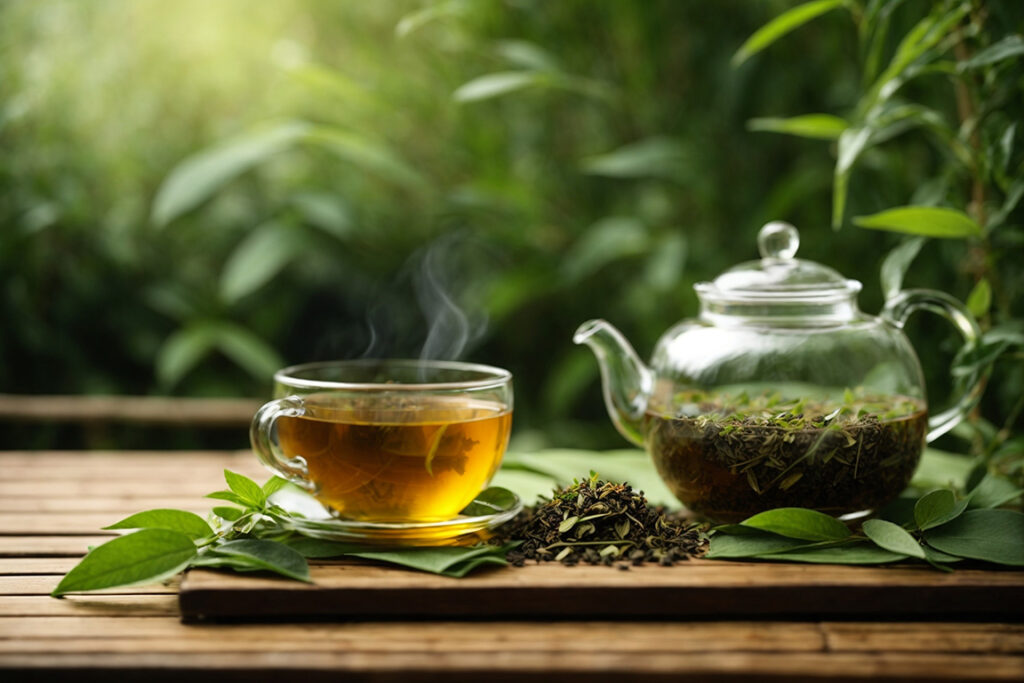
Green tea is made from the leaves of the tea plant, Camellia sinensis.
It comes from the same plant as white, oolong and black tea. What makes it green tea is its processing: the freshly harvested leaves are heated early to limit oxidation, helping preserve their green color and fresh, vegetal character.
How Green Tea Is Made
Soon after harvesting, green tea leaves are heated to deactivate the enzymes responsible for oxidation.
Two common methods are:
- Steaming, traditionally associated with many Japanese green teas
- Pan-firing, commonly used for many Chinese green teas
The leaves may then be rolled, shaped and dried. Differences in growing conditions, harvest time, heating method and shaping create a wide range of green teas.
Some taste grassy, vegetal or marine, while others may be floral, nutty, toasted or softly sweet.
Brewed green tea is generally clear and ranges from pale yellow-green to golden-green. It should not necessarily appear bright green in the cup.
Bioactive Compounds & Research
Green tea naturally contains polyphenols, particularly flavonoids known as catechins. One of the most studied is epigallocatechin gallate, commonly shortened to EGCG.
It also contains caffeine and the amino acid L-theanine, although the amounts vary among teas and preparations.
Green tea has been extensively studied in connection with cardiovascular health, cholesterol, body weight, metabolism and other areas. However, research results vary, and evidence does not support every health claim made about green tea.
It is also important to distinguish an ordinary brewed cup from a concentrated green-tea extract. Research or safety information involving a capsule or standardized extract should not automatically be applied to the beverage.
The National Center for Complementary and Integrative Health provides an overview of current green-tea research and safety information.
Brewing & Considerations
Green tea is usually brewed with water cooler than boiling. Water that is too hot or steeping that continues too long can produce a bitter or sharply astringent cup.
The best temperature and steeping time depend on the specific tea, so begin with the directions supplied with the product and adjust for taste.
Green tea naturally contains caffeine. The amount in a cup varies with the leaves, serving size, water temperature and steeping time.
Green tea consumed as a beverage is generally well tolerated by adults. Concentrated extracts are different products and may carry additional risks, including medication interactions and, in uncommon cases, liver injury.
Related Terms
Related teas and concepts include Jasmine Tea, White Tea, Oolong Tea, Black Tea, Matcha, Polyphenol, Flavonoid, Antioxidant and Bioactive Compound. These terms help explain green tea’s preparation, natural constituents and place within tea and wellness discussions.
A Note on Wellness Language
Wellness terms can change over time and may be used differently across scientific, traditional and commercial settings. Our goal is to explain them clearly, distinguish historical meaning from modern marketing, and give enough context for you to make sense of the language you encounter.
A Note on Educational Information
The information in this glossary is provided for educational purposes only. It is intended to explain terminology and provide context, not to diagnose, treat, cure or prevent disease, or replace advice from a qualified healthcare professional.
Return to the Herbal & Wellness Glossary
Return to the Herbal & Wellness Glossary to explore more terms, preparation methods and wellness concepts used throughout the site.
Fresh leaf. Gentle heat. A brighter cup. 🍵