
Elderberry / Sambucus nigra
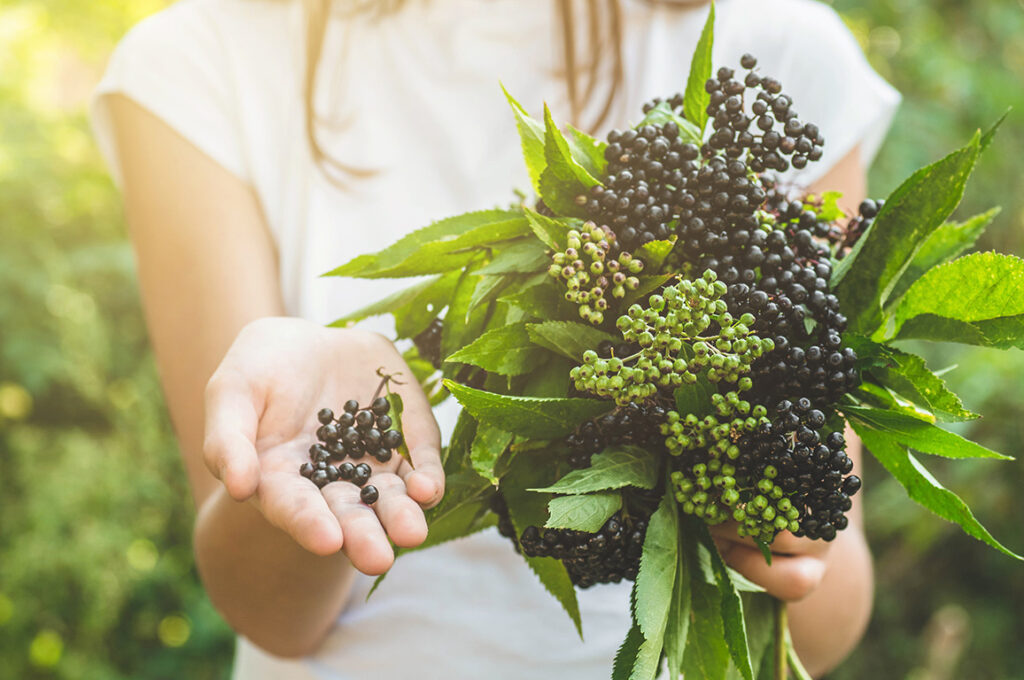
Elderberry is the dark purple fruit of the elder tree, a shrub or small tree traditionally valued for food, folk medicine and seasonal preparations. The plant produces clusters of fragrant white flowers followed by deep purple-black berries. Both elderflowers and elderberries have long histories of culinary and traditional herbal use, although the way the plant is prepared matters.
Botanical Snapshot
Common Name: Elderberry
Botanical Name: Sambucus nigra
Plant Family: Viburnaceae
Plant Type: Deciduous shrub or small tree
Native Range: Europe, the Azores and western Asia to western Iran
Part Commonly Used: Berries and flowers
Herbal Use & Bioactive Compounds
Elderberry has a long history of traditional use, particularly during cold and flu season. The deep purple berries contain polyphenols, including flavonoids and anthocyanins, which contribute to their color and measured antioxidant activity.
Laboratory research and a limited number of human studies have explored elderberry for antiviral, anti-inflammatory and immune-related activity. Some studies suggest certain preparations may help reduce the duration or severity of upper respiratory symptoms, but clinical evidence remains limited and elderberry has not been established as a treatment or preventive for viral illness.
Culinary Use & Common Forms
Elderberry is commonly prepared as syrups, jams, jellies, sauces, extracts, gummies, capsules and herbal blends. Dried berries are also used in home preparations.
Elderflowers are used separately in teas, cordials, syrups and other culinary preparations. Although they come from the same plant, elderflower and elderberry are different plant parts and are not automatically interchangeable.
Safety & Considerations
Raw or unripe elderberries, seeds, stems and leaves contain naturally occurring cyanogenic compounds that can release hydrogen cyanide when broken down. Using ripe berries and proper cooking helps make elderberry preparations safe for consumption. Those who are pregnant, breastfeeding, taking medications or managing health conditions should consult a qualified healthcare professional before using concentrated elderberry products.
Sourcing & Sustainability
Choose elderberry products that clearly identify the plant and plant part used. Look for the botanical name Sambucus nigra, and prioritize reputable sourcing, accurate identification and proper preparation.
Spiritual, Magical & Folk Traditions
Elder has a rich place in European folklore, where it has long been associated with protection, healing, transformation, regeneration and the spirit world.
Some traditions held that a protective spirit, often called the Elder Mother, inhabited the tree, and customs developed around asking permission before cutting or harvesting it. Elder was also planted near homes or used symbolically for protection.
Indigenous Uses of North American Elder
Elder also has a long history among Indigenous peoples of North America. Native elder species and varieties were used for food, traditional medicine, dyes, tools and musical or ceremonial instruments.
These traditions vary among Indigenous nations and often involve North American elder species or varieties other than European black elder specifically.
Related Articles & Resources
Want to learn more about elderberry? Read Elderberry: What’s All the Fuss? for a closer look at this much-loved botanical.
Ready to make your own? Try our Classic Elderberry Syrup or Classic Elderberry Syrup — Instant Pot Method.
For evidence-based information about elderberry research and safety, visit the National Center for Complementary and Integrative Health (NCCIH) Elderberry resource.
A Note on Herbal Information
The information in this profile is provided for educational purposes and reflects a mix of botanical reference material, historical use, traditional practices and contemporary perspectives. It is not intended to diagnose, treat, cure or prevent disease, and it should not replace advice from a qualified healthcare professional.
Explore More Botanicals
Return to the Botanical Glossary to explore herbs, roots, flowers, spices and other botanicals along with their traditional uses, history, folklore and modern context.
Small berry. Deep roots. 🌿