
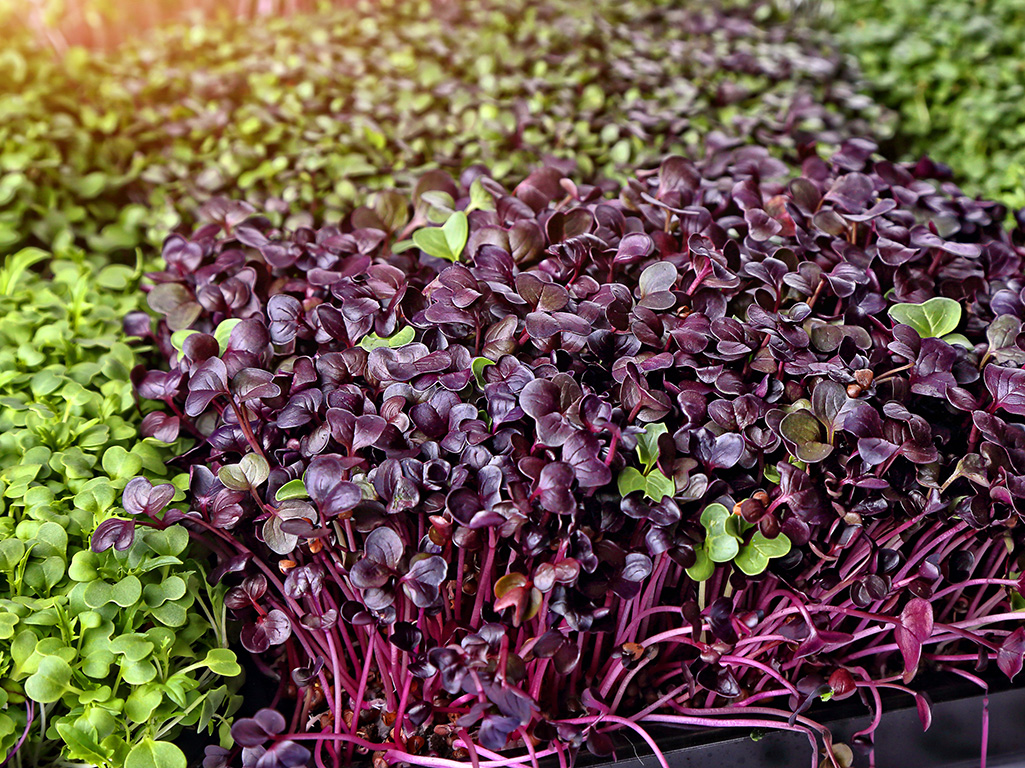
Microgreens are young, edible seedlings of vegetables, herbs and other plants harvested shortly after germination, usually once the seed leaves and sometimes the first true leaves have developed.
They are older than sprouts but younger than baby greens or mature plants. Common microgreens include broccoli, radish, kale, pea, sunflower, basil and cilantro.
Microgreens vs. Sprouts and Baby Greens
Although the terms are sometimes confused, they describe different stages of plant growth.
Sprouts are harvested very early and are generally eaten seed, root and shoot together. Microgreens grow longer, require light and are cut above the growing medium. Baby greens are allowed to mature further and develop several true leaves before harvest.
Nutrition & Research
Microgreens can provide vitamins, minerals and naturally occurring bioactive compounds, including polyphenols and other antioxidants. Their nutritional composition varies considerably depending on the plant species, growing conditions and stage at harvest.
Studies have found that some microgreens contain higher concentrations of certain nutrients or plant compounds than their mature counterparts. That does not mean every microgreen is nutritionally superior to the mature plant, or that eating microgreens has been proven to produce specific health effects.
Food Safety & Considerations
Microgreens are often eaten raw, so clean growing, harvesting, storage and handling practices are important. Like other fresh produce, they can become contaminated with harmful microorganisms during production or handling.
Related Terms & Resources
Related concepts include Bioactive Compound, Antioxidant and Polyphenol.
For a deeper look at how microgreens are grown, their nutritional composition and how they differ from sprouts and mature greens, read Microgreens: Tiny Plants with a Powerful Nutritional Punch in Tools to Heal Your World.
For additional research, explore Microgreens on the Rise: Expanding Our Horizons from Farm to Fork through PubMed.
A Note on Wellness Language
Wellness terms can change over time and may be used differently across scientific, traditional and commercial settings. Our goal is to explain them clearly, distinguish historical meaning from modern marketing, and give enough context for you to make sense of the language you encounter.
A Note on Educational Information
The information in this glossary is provided for educational purposes only. It is intended to explain terminology and provide context, not to diagnose, treat, cure or prevent disease, or replace advice from a qualified healthcare professional.
Return to the Herbal & Wellness Glossary
Return to the Herbal & Wellness Glossary to explore more terms, preparation methods and wellness concepts used throughout the site.
Tiny greens, big possibilities. 🌱