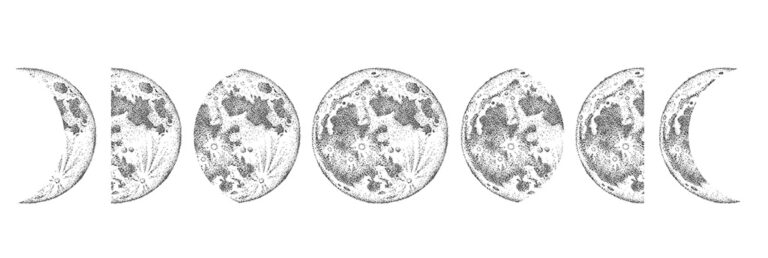
The Spiritual & Metaphysical Meaning of the Autumnal Equinox
A Season of Balance, Harvest, Gratitude & Release
By Catherine Costello
There is something unmistakable about the turning of the seasons.
Even before the air becomes noticeably cooler or the landscape begins changing color, nature starts sending subtle signals that summer is loosening its hold. The days shorten. Shadows stretch a little longer. Plants begin completing their growing cycles. The natural world seems to shift from expansion toward preparation.
At the center of this seasonal transition is the autumnal equinox—an astronomical event that has also become a meaningful spiritual marker for many people around the world.
The equinox invites us to notice something nature demonstrates beautifully: life moves in cycles.
There are seasons for beginning and seasons for completing. Seasons for growing, gathering, resting, releasing and beginning again.
And autumn asks a particularly powerful question:
What are you ready to carry forward—and what are you ready to leave behind?
What Is the Autumnal Equinox?
Astronomically, an equinox occurs twice each year, when the center of the Sun crosses Earth’s equatorial plane. At these points in Earth’s orbit, neither hemisphere is tilted more toward the Sun than the other.
The word equinox comes from the Latin aequus, meaning “equal,” and nox, meaning “night.”
Although we commonly describe the equinox as a day of equal daylight and darkness, they aren’t perfectly equal. Atmospheric refraction and the way sunrise and sunset are measured give us slightly more daylight. Still, the equinox represents one of the closest points of balance between light and darkness during the year.
In the Northern Hemisphere, the September equinox marks the beginning of astronomical autumn. From this point forward, darkness gradually occupies more of each twenty-four-hour cycle until the winter solstice.
It is a physical event—Earth continuing its journey around the Sun.
But for those who find spiritual meaning in the rhythms of nature, it can also be something more.
Standing at the Point of Balance
Perhaps the most recognizable spiritual symbol of the autumnal equinox is balance.
Light and darkness meet at the threshold.
Neither has disappeared. Neither needs to defeat the other.
Both exist.
That makes the equinox a beautiful time to consider the places in our own lives where balance may have been lost.
Have we been constantly doing without allowing ourselves simply to be?
Giving without receiving?
Planning for tomorrow while forgetting to experience today?
Holding tightly to something when it may be time to release it?
We often think of balance as a perfectly still state, but nature shows us something different. Balance is rarely static.
The seasons never stop moving.
Perhaps balance is not about keeping everything perfectly even. Perhaps it is learning how to adjust as life changes around us.
Honoring Both the Light and the Dark
The symbolism of equal light and darkness can also represent the wholeness of the human experience.
We naturally gravitate toward the “light”—joy, hope, growth, accomplishment, love and certainty.
Yet life contains uncertainty, grief, endings, disappointment and periods when we simply don’t know what comes next.
Many spiritual traditions encourage us not to deny these darker seasons but to recognize that they, too, can contain wisdom.
Autumn does not apologize for becoming autumn.
A tree does not consider itself a failure because its leaves fall.
The garden has not lost its purpose because its growing season is ending.
Nature simply changes form.
The equinox can therefore become a reminder that acknowledging the difficult, unfinished or uncomfortable parts of ourselves does not diminish the light within us.
Wholeness has room for both.
The Season of Harvest
Long before supermarkets made food available year-round, autumn’s harvest carried very practical importance.
A successful growing season meant food, resources and greater security during the approaching winter. Harvest was a time of gathering what months of planting, tending and labor had produced.
That symbolism translates beautifully into personal reflection.
Our harvest does not have to come from a field.
It may be something we learned.
A relationship we nurtured.
A project we completed.
A boundary we finally established.
A skill we developed.
A difficult experience we survived and grew through.
A tiny decision made months ago that quietly changed the direction of our life.
The autumnal equinox offers an opportunity to stop constantly looking toward the next goal and instead recognize what has already grown.
Ask yourself:
What am I harvesting from this season of my life?
Sometimes abundance becomes visible only when we pause long enough to notice it.
Gratitude Before the Next Season
Harvest naturally leads to another traditional autumn theme: gratitude.
Gratitude does not mean pretending everything is wonderful.
Nor does it require ignoring difficulty.
It simply asks us to notice what has nourished us alongside whatever has challenged us.
Who showed up for you?
What sustained you?
What brought you unexpected joy?
What did you learn?
What ordinary thing became precious?
Gratitude can shift attention from perpetual wanting toward recognition.
The equinox offers a natural place to pause between seasons and say:
This mattered.
This helped me.
I am thankful this was part of my journey.
The Sacred Art of Letting Go
Then comes perhaps autumn’s most familiar lesson.
Release.
Trees begin withdrawing energy from their leaves before eventually allowing them to fall.
Nature becomes less concerned with outward production and begins conserving resources for what comes next.
Metaphysically, autumn has therefore become strongly associated with releasing what has completed its purpose.
That might include an outdated belief about yourself.
An obligation you accepted long ago but no longer need to carry.
Resentment.
Clutter.
An unrealistic expectation.
A habit.
A fear.
Or perhaps simply the belief that everything must remain exactly as it has been.
Letting go does not always mean something was bad.
Sometimes something can have been wonderful and still be finished.
That may be one of autumn’s gentlest lessons:
We can be grateful for what was and still allow it to end.
Turning Inward
Spring and summer naturally lend themselves to outward energy—planting, building, creating, traveling, gathering and doing.
Autumn begins a gradual movement in another direction.
The days become shorter. The nights lengthen. The natural world begins slowing.
Spiritually, this makes autumn a natural season for introspection.
Not isolation.
Not withdrawal from life.
Simply listening a little more closely.
Meditation, journaling, quiet walks, contemplation and intentional moments without constant stimulation can all become ways of participating in that seasonal shift.
Questions we avoided during busier seasons sometimes become easier to hear when life becomes quieter.
What needs my attention?
Where is my energy actually going?
What am I carrying simply because I have become accustomed to carrying it?
What would I like the next season of my life to feel like?
Is the Autumn Equinox the Same as Mabon?
You may hear the autumnal equinox referred to as Mabon, particularly within modern Pagan, Wiccan and earth-centered spiritual communities.
There is an important historical distinction.
Seasonal observances and harvest traditions are ancient and culturally widespread, but Mabon as the name of an autumn-equinox festival is modern. The name was introduced into contemporary Pagan seasonal practice in the 1970s by Aidan Kelly, drawing upon Mabon ap Modron, a figure from medieval Welsh literature. It subsequently became widely used within modern Pagan traditions and the contemporary Wheel of the Year.
That does not make modern Mabon observances less meaningful.
Traditions evolve.
It simply allows us to appreciate them without rewriting their history.
Today, some people celebrate the equinox religiously, some spiritually, some culturally and others simply as an opportunity to reconnect with nature and reflect on the changing season.
There is room for all of those experiences.
Metaphysical Associations of the Autumn Equinox
Within contemporary metaphysical practice, several themes are commonly associated with the autumnal equinox:
Balance — considering where our lives may need greater harmony.
Harvest — recognizing the results of our efforts and experiences.
Gratitude — acknowledging what has nourished and supported us.
Release — letting go of what is complete or no longer useful.
Grounding — reconnecting with the body, the Earth and the present moment.
Reflection — turning inward and listening more carefully.
Transition — honoring the space between one season and another.
Preparation — deciding intentionally what we want to carry forward.
These associations are spiritual and symbolic interpretations rather than properties produced scientifically by the astronomical event itself. Their meaning ultimately depends upon the beliefs and practices of the person observing the season.
And perhaps that freedom is part of their beauty.
Simple Ways to Honor the Equinox
You don’t need an elaborate ritual to acknowledge the changing season.
You might take a walk and intentionally notice what is changing in the natural world.
Prepare a cup of tea and spend a few quiet minutes reflecting.
Light a candle.
Write a gratitude list.
Clean out a drawer that has been bothering you for months.
Donate something you no longer need.
Prepare a seasonal meal.
Gather leaves, herbs, flowers or other natural objects for a seasonal display.
Meditate.
Spend time outside at sunset.
Write down something you are ready to release and then safely tear up the paper.
Or simply sit somewhere peaceful and ask yourself three questions:
What am I harvesting?
What am I releasing?
What am I making room for?
No special tools are required.
The ritual is the intention behind the action.
Moving With the Seasons
Modern life makes it remarkably easy to forget that we are part of nature rather than observers standing somewhere outside of it.
We can keep lights burning after sunset.
Eat strawberries in winter.
Work through the night.
Stay constantly connected.
Ignore weather, seasons and natural rhythms almost entirely.
Yet the Earth continues turning.
The seasons continue changing.
The equinox arrives whether we notice it or not.
Perhaps that is why these seasonal thresholds can feel so meaningful.
They invite us to notice.
To look at where we have been.
To appreciate what has grown.
To release what has finished.
And to remember that rest, change and endings belong to the same natural cycle as beginnings.
Autumn does not ask us to stop growing.
It reminds us that growth does not always look like expansion.
Sometimes growth looks like gathering.
Sometimes it looks like simplifying.
Sometimes it looks like resting.
And sometimes it looks like finally opening our hands and allowing something to fall away.
As we cross the autumnal equinox and move toward the quieter months ahead, perhaps the invitation is beautifully simple:
Find your balance.
Honor your harvest.
Give thanks for what has nourished you.
Release what has run its course.
And make room for what comes next.
Be Happy. Be Well. Be Blessed.
o0~

Catherine Costello
Curious Generalist • Research-Driven Writer • Life Long Learner • Rock Hound
Small-business owner, creative, rock hound, and unapologetically curious generalist, Cat follows interesting questions wherever they lead. Her research-driven articles explore everything from herbs, geology, and science to history, folklore, spirituality, and the occasional irresistible rabbit hole.