
Rooibos / Aspalathus linearis
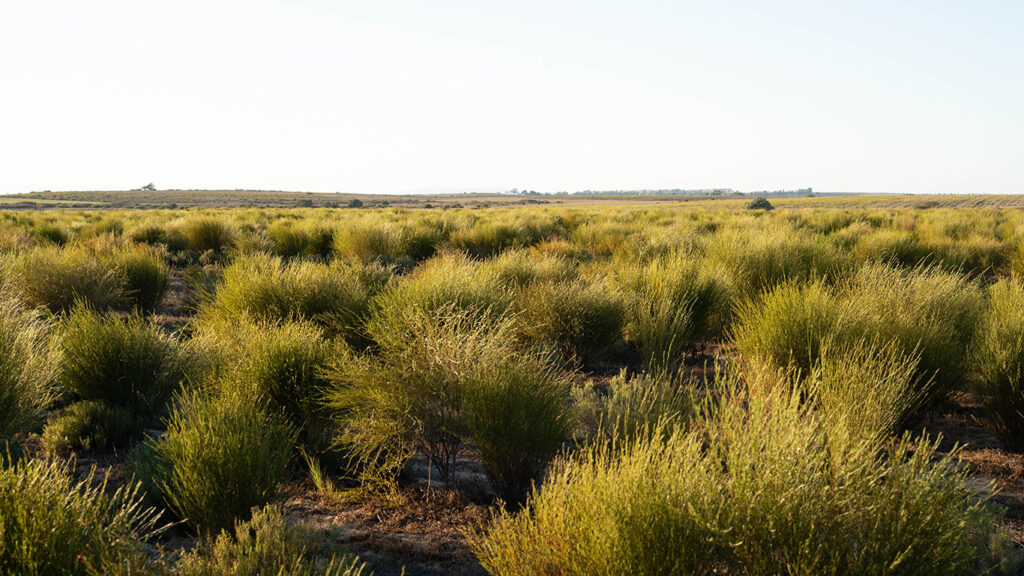
Rooibos is a South African shrub best known for the naturally caffeine-free herbal infusion made from its fine, needle-like leaves and stems. Although commonly called rooibos tea or red bush tea, it is not a true tea from Camellia sinensis.
Traditional red rooibos develops its characteristic reddish-brown color and mellow flavor through oxidation, while green rooibos is dried with minimal oxidation and retains a lighter color and more herbaceous taste.
Botanical Snapshot
Common Name: Rooibos, Red Bush
Botanical Name: Aspalathus linearis
Plant Family: Fabaceae
Plant Type: Perennial shrub
Native Range: Cape region of South Africa
Parts Commonly Used: Leaves and fine stems
Herbal Use & Bioactive Compounds
Rooibos has a long history as a South African herbal tisane and contains several naturally occurring polyphenols and flavonoids. Of particular interest are aspalathin and nothofagin, two dihydrochalcone compounds strongly associated with rooibos.
Laboratory, animal and small human studies have explored rooibos for antioxidant, anti-inflammatory and metabolic effects. Human research remains limited, however, and current evidence is not strong enough to support many of the broader health claims sometimes made for rooibos.
Culinary Use & Common Forms
Rooibos is most commonly brewed as a hot or iced herbal infusion. Its naturally caffeine-free character and relatively low tannin content give it a smooth, mildly sweet flavor that works well on its own or in herbal and flavored tea blends.
The two primary forms are:
- Red rooibos — oxidized after harvest, producing the familiar reddish color and fuller flavor.
- Green rooibos — dried with minimal oxidation, giving it a greener color and somewhat different polyphenol profile.
Rooibos may also appear in extracts, powdered products, beverages and culinary preparations.
Safety & Considerations
Rooibos has a long history of use as a beverage and is generally well tolerated. Human safety data on highly concentrated extracts and medicinal-level use are much more limited.
Rare case reports of liver injury have been associated with rooibos-containing products, although such reports are uncommon and do not establish that ordinary rooibos tea poses the same risk. Laboratory research also suggests that concentrated rooibos extracts may affect some drug-metabolizing enzymes, so concentrated products deserve more caution than an occasional cup of tea.
Sourcing & Sustainability
True rooibos comes from Aspalathus linearis, a plant native to South Africa’s Cape region. Look for products that clearly identify rooibos as the ingredient and provide reliable information about South African origin.
The name Rooibos/Red Bush received Protected Designation of Origin status in the European Union in 2021, recognizing both its South African geographical origin and the traditional oxidized and green forms of the product.
Cultural & Indigenous Uses
Rooibos has deep cultural roots in South Africa. The South African government has formally recognized the Khoi and San peoples as holders of traditional knowledge associated with rooibos.
In 2019, representatives of the Khoi and San communities, the South African rooibos industry and the government established an industry-wide benefit-sharing agreement recognizing this traditional knowledge and providing communities with a share of commercial benefits derived from rooibos.
Related Articles & Resources
Related terms include Polyphenol, Flavonoid, Antioxidant and Bioactive Compound.
For more information on current human research, see the PubMed review The Health Benefits of Rooibos Tea in Humans (Aspalathus linearis): A Scoping Review.
For cultural and traditional-knowledge context, see the South African Government — Rooibos Traditional Knowledge Industry-Wide Benefit Sharing Agreement.
A Note on Herbal Information
The information in this profile is provided for educational purposes and reflects a mix of botanical reference material, historical use, traditional practices and contemporary perspectives. It is not intended to diagnose, treat, cure or prevent disease, and it should not replace advice from a qualified healthcare professional.
Explore More Botanicals
Return to the Botanical Glossary to explore herbs, roots, flowers, spices and other botanicals along with their traditional uses, history, folklore and modern context.
Warm, earthy and unmistakably South African. 🌿☕