
Clove / Syzygium aromaticum
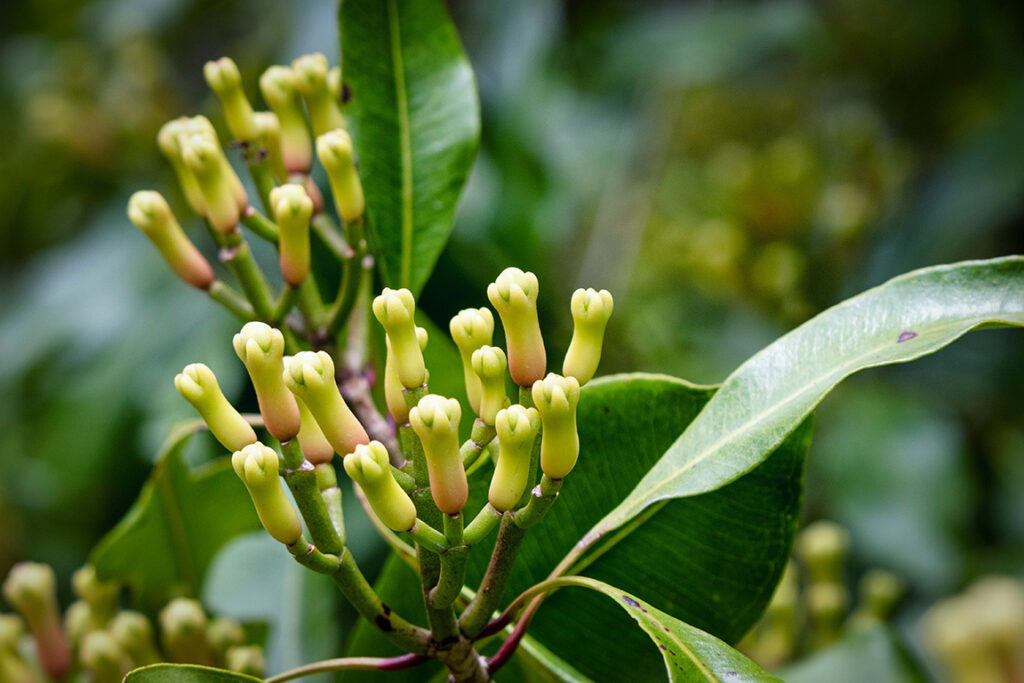
Clove is the dried, unopened flower bud of Syzygium aromaticum, an evergreen tree in the myrtle family native to Indonesia’s Maluku Islands. Intensely aromatic, warm and slightly sweet, cloves have been valued for centuries as a culinary spice and traditional herbal ingredient.
Botanical Snapshot
Common Name: Clove
Botanical Name: Syzygium aromaticum (L.) Merr. & L.M.Perry
Plant Family: Myrtaceae
Plant Type: Tropical evergreen tree
Native Range: Maluku Islands, Indonesia
Part Commonly Used: Dried unopened flower buds; essential oil is also produced from the buds and leaves
Herbal Use & Bioactive Compounds
Clove has traditionally been used for digestive discomfort and oral and dental care. Its characteristic aroma and many of its studied properties are associated with eugenol, the predominant component of clove volatile oil.
Other naturally occurring bioactive compounds include eugenyl acetate, β-caryophyllene, flavonoids and other polyphenols. Laboratory and preclinical research has explored antioxidant, antimicrobial, anti-inflammatory and analgesic activity, but these findings should not be interpreted as evidence that clove treats disease.
Culinary Use & Common Forms
Whole or ground cloves are used in baked goods, spice blends, curries, sauces, pickling mixtures, teas and warm beverages. Their strong flavor means relatively small amounts are usually needed.
Common forms include whole dried buds, ground spice, extracts and clove essential oil.
Safety & Considerations
Clove used in normal culinary amounts is very different from concentrated clove oil. Eugenol-rich essential oil can irritate the skin and mucous membranes, and swallowing significant amounts of clove oil can cause serious toxicity.
Concentrated clove preparations should be used cautiously, particularly by children, during pregnancy or breastfeeding, or by people taking medications or managing medical conditions.
Sourcing & Sustainability
Look for whole cloves that are intact, strongly aromatic and identified as Syzygium aromaticum. Whole buds generally retain their volatile oils and flavor longer than pre-ground spice.
Because clove is cultivated in several tropical regions, reputable sourcing and attention to growing and processing practices are more useful quality indicators than geographic origin alone.
Cultural & Indigenous Uses
Native to Indonesia’s Maluku Islands, clove has a long history in Southeast Asian foodways and traditional plant use and became one of the world’s most important traded spices. Over centuries, it was incorporated into culinary and traditional practices throughout South Asia, the Middle East, Africa and other regions.
Related Articles & Resources
Related terms include Bioactive Compound, Volatile Oil, Flavonoid, Polyphenol, Antioxidant and Analgesic.
For additional research, see the National Institutes of Health article, Syzygium aromaticum L. (Myrtaceae): Traditional Uses, Bioactive Chemical Constituents, Pharmacological and Toxicological Activities.
A Note on Herbal Information
The information in this profile is provided for educational purposes and reflects a mix of botanical reference material, historical use, traditional practices and contemporary perspectives. It is not intended to diagnose, treat, cure or prevent disease, and it should not replace advice from a qualified healthcare professional.
Explore More Botanicals
Return to the Botanical Glossary to explore herbs, roots, flowers, spices and other botanicals along with their traditional uses, history, folklore and modern context.
Small bud. Bold spice. Centuries of story. 🌿