
Sage Leaf / Salvia officinalis
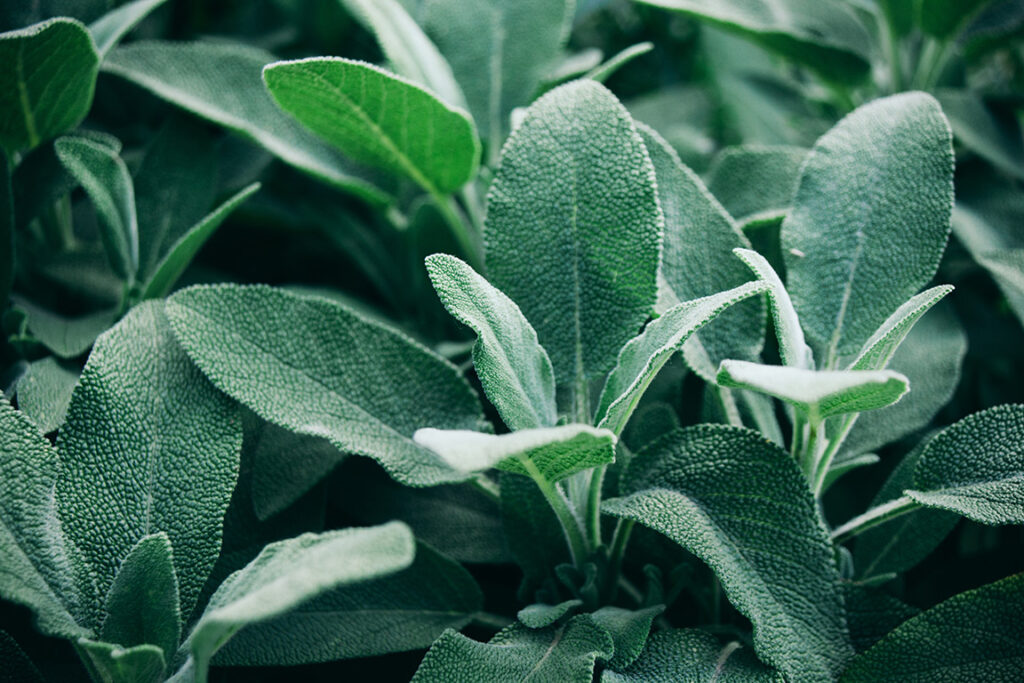
Sage leaf comes from Salvia officinalis, the aromatic perennial commonly known as common sage, garden sage or culinary sage. Native to the Mediterranean region, its gray-green leaves have been valued for centuries as both a flavorful culinary herb and a traditional herbal preparation.
Although many plants are commonly called “sage,” this profile refers specifically to Salvia officinalis and not White Sage, Black Sage or Blue Sage.
Botanical Snapshot
Common Name: Sage Leaf, Common Sage, Culinary Sage
Botanical Name: Salvia officinalis
Plant Family: Lamiaceae
Plant Type: Woody perennial herb/subshrub
Native Range: Mediterranean region
Part Commonly Used: Leaves
Herbal Use & Bioactive Compounds
Sage leaf has a long history in European herbal traditions, particularly for digestive discomfort, excessive perspiration and preparations for the mouth and throat. Modern research has also explored sage in relation to memory, cognition, menopausal hot flashes and metabolic health, but the clinical evidence remains limited and preliminary.
The leaves contain a complex mixture of naturally occurring compounds, including rosmarinic acid, flavonoids and aromatic terpenes. Sage essential oil commonly contains thujone, camphor and 1,8-cineole, although the proportions vary between plants and growing conditions.
Culinary Use & Common Forms
Sage has a warm, earthy and slightly peppery flavor traditionally used with poultry, pork, sausage, stuffing, beans, squash and other savory dishes. The leaves may be used fresh or dried and are especially well suited to slow-cooked foods and herb-infused butter or sauces.
Herbal preparations include dried leaf, herbal infusions, tinctures, extracts and mouth or throat rinses. Sage essential oil is a much more concentrated preparation and should not be treated as equivalent to the culinary herb or a simple leaf infusion.
Safety & Considerations
Sage is generally considered safe in amounts normally used in food. However, Salvia officinalis contains thujone, which may be toxic in excessive amounts; high-dose or prolonged medicinal use should therefore be avoided. Concentrated sage essential oil can contain substantially more thujone than ordinary culinary preparations.
Medicinal use during pregnancy is not recommended because of concerns related to thujone, and safety during breastfeeding has not been well established. People taking medications should consult a qualified healthcare professional before using concentrated sage preparations.
Sourcing & Sustainability
Because the name sage is applied to many different species, look for the botanical name Salvia officinalis when purchasing sage leaf for culinary or herbal use.
Common sage is widely cultivated and is not considered globally threatened. Choose properly identified, cleanly dried leaves from reputable growers or suppliers, particularly when the herb will be used in teas or other internal preparations.
Spiritual, Magical & Folk Traditions
Sage has been associated for centuries with wisdom, longevity, protection, cleansing and good health in European and Mediterranean traditions. The genus name Salvia is related to the Latin salvere, meaning to be well, healthy or saved, reflecting the plant’s long-standing reputation as a healing herb.
Ancient Roman and later medieval traditions treated sage as an important and sometimes sacred herb. Its reputation for longevity became so strong that medieval writings famously questioned how someone could die when sage grew in the garden.
Related Articles & Resources
Related terms include Bioactive Compound, Flavonoid, Polyphenol, Herbal Infusion and Volatile Oil.
For more information on sage’s history, traditional use, current research and safety, see the National Center for Complementary and Integrative Health — Sage: Usefulness and Safety.
A Note on Herbal Information
The information in this profile is provided for educational purposes and reflects a mix of botanical reference material, historical use, traditional practices and contemporary perspectives. It is not intended to diagnose, treat, cure or prevent disease, and it should not replace advice from a qualified healthcare professional.
Explore More Botanicals
Return to the Botanical Glossary to explore herbs, roots, flowers, spices and other botanicals along with their traditional uses, history, folklore and modern context.
A timeless leaf of wisdom, flavor & tradition. 🌿