
Hibiscus / Hibiscus sabdariffa
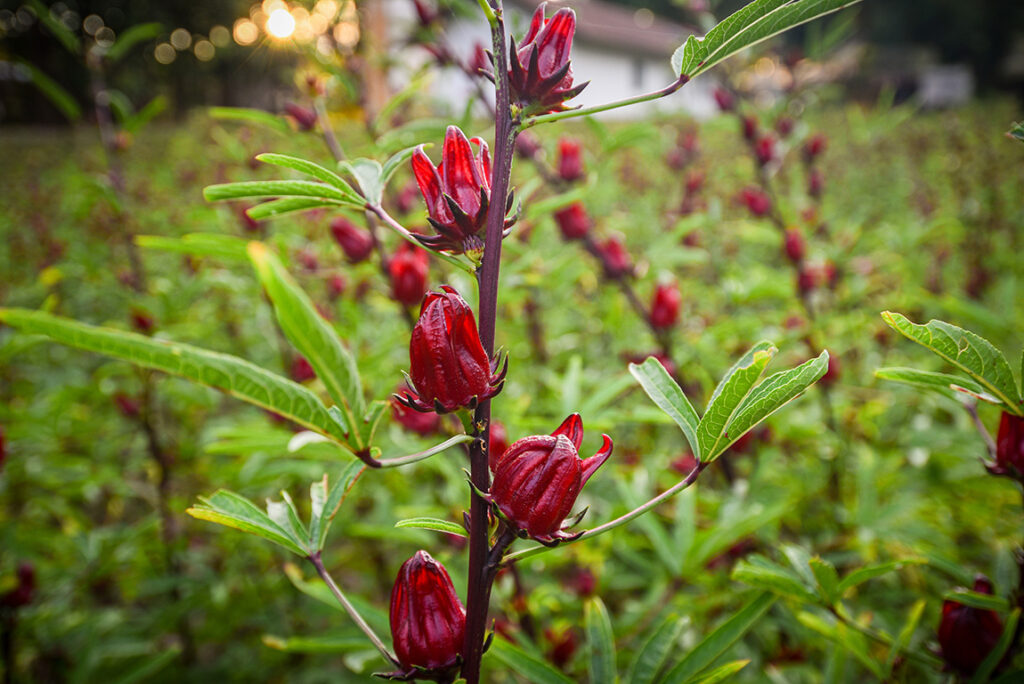
Hibiscus, or roselle, is a tropical plant known for the deep red, tart calyces commonly used in herbal teas and beverages. Although often called “hibiscus flowers,” the dried material used for tea is primarily the fleshy structure that remains around the seedpod after the flower fades.
This profile focuses on Hibiscus sabdariffa, the species traditionally used for roselle, sorrel, karkade and agua de Jamaica.
Botanical Snapshot
Common Name: Hibiscus, Roselle, Red Sorrel
Botanical Name: Hibiscus sabdariffa
Plant Family: Malvaceae
Plant Type: Tropical annual or short-lived perennial
Native Range: Tropical Africa; now widely cultivated
Part Commonly Used: Calyx; leaves are also edible
Herbal Use & Bioactive Compounds
Hibiscus has a long history of use as both a beverage and traditional herbal botanical. Preparations have been associated particularly with cardiovascular, digestive and urinary wellness.
The red calyces contain anthocyanins, polyphenols, flavonoids and organic acids, which contribute to their deep color, tart flavor and antioxidant activity. Clinical research has found that hibiscus consumption may modestly lower blood pressure, particularly in people with elevated blood pressure, although it should not replace prescribed treatment.
Culinary Use & Common Forms
Hibiscus has a pleasantly tart, cranberry-like flavor and can be enjoyed hot or cold.
The calyces are used in teas, juices, syrups, jams, jellies and sauces. Popular hibiscus beverages include karkade, bissap, zobo, agua de Jamaica and Caribbean sorrel.
Common herbal forms include dried calyces, tea blends, extracts, tinctures and capsules.
Safety & Considerations
Hibiscus tea is generally well tolerated, although concentrated preparations may cause mild digestive discomfort in some people.
Because hibiscus may lower blood pressure, people taking medications for blood pressure or blood sugar should use concentrated supplements with appropriate medical guidance. Safety of medicinal amounts during pregnancy and breastfeeding has not been well established.
Sourcing & Sustainability
Look for roselle identified as Hibiscus sabdariffa rather than ornamental hibiscus species.
Good-quality dried calyces should retain a deep red color and tart aroma and should be obtained from reputable sources that clearly identify the botanical material.
Spiritual, Magical & Folk Traditions
In contemporary folk and magical traditions, hibiscus is associated with love, passion, beauty, attraction, creativity and emotional vitality.
Its vivid red color and tropical character make it a popular addition to practices centered around self-love, relationships, confidence and bringing warmth or passion into an intention.
Cultural & Indigenous Uses
Roselle has become deeply woven into food and beverage traditions across Africa, the Caribbean, Mexico and other tropical regions.
In Sudan and surrounding regions it is prepared as karkade; in West Africa, related beverages include bissap and zobo. In Mexico, the calyces are used to make agua de Jamaica, while Caribbean sorrel is closely associated with Christmas and holiday traditions.
Related Articles & Resources
Related terms include Anthocyanin, Bioactive Compound, Polyphenol, Flavonoid and Antioxidant.
UF/IFAS Extension: Healthy Harvest: Florida Herbs
A Note on Herbal Information
The information in this profile is provided for educational purposes and reflects a mix of botanical reference material, historical use, traditional practices and contemporary perspectives. It is not intended to diagnose, treat, cure or prevent disease, and it should not replace advice from a qualified healthcare professional.
Explore More Botanicals
Return to the Botanical Glossary to discover more herbs, mushrooms, woods, resins and other botanicals currently carried at Crystal by the Sea.
Bold color, bright flavor & a little tropical warmth. 🌺