
White Sage / Salvia apiana
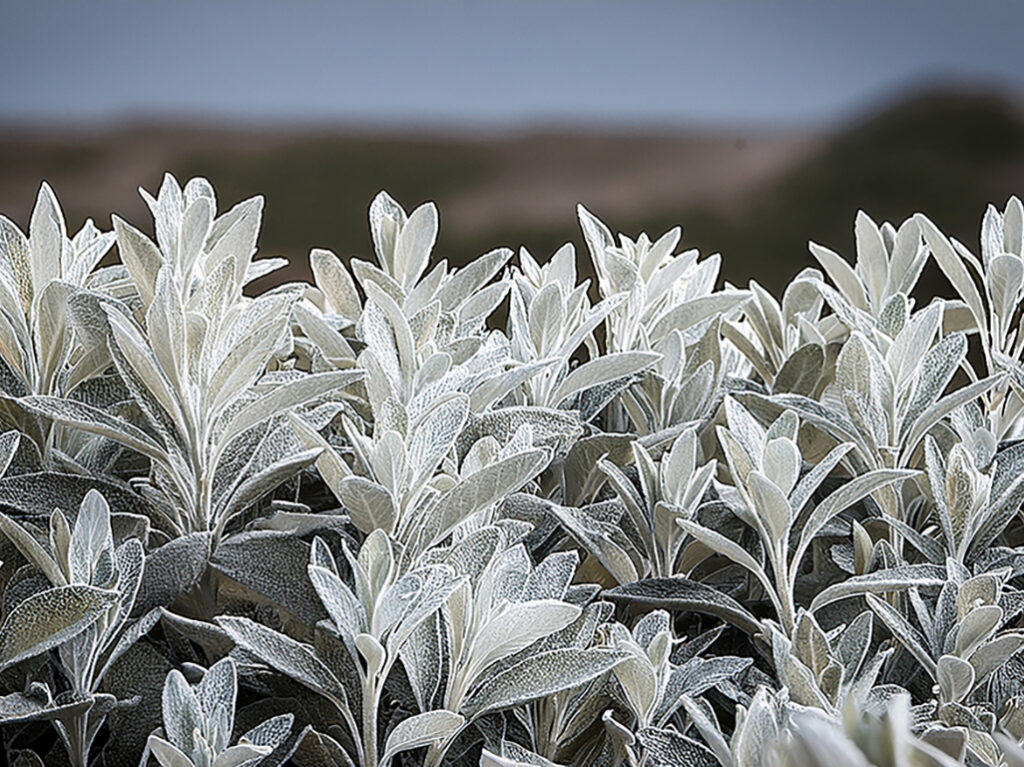
White sage is a strongly aromatic perennial shrub native to Southern California and Baja California. Known for its silvery leaves and tall flowering stalks, it has a long history of food, medicinal and ceremonial use among Indigenous peoples of the region and is now widely recognized for its use in incense and smoke-cleansing practices.
Botanical Snapshot
Common Name: White Sage, Bee Sage
Botanical Name: Salvia apiana
Plant Family: Lamiaceae (Mint Family)
Plant Type: Aromatic perennial shrub
Native Range: Southern California and Baja California
Part Commonly Used: Leaves, stems and seeds
Herbal Use & Bioactive Compounds
White sage has a documented history of traditional medicinal use, including preparations for respiratory complaints, skin care and hygiene. Modern research has identified essential oils, diterpenoids, triterpenoids, phenolic compounds and flavonoids within the plant.
Laboratory studies have found antimicrobial, antioxidant and other biological activity in white sage extracts and individual compounds, but this research does not establish those effects as proven medical treatments in people.
Culinary Use & Common Forms
White sage seeds were traditionally used as food, including in pinole, while leaves were sometimes used for flavoring and other preparations.
White sage should not be confused with common culinary sage (Salvia officinalis), the species most often used as a kitchen herb. Today, Salvia apiana is more commonly encountered as dried leaves, loose herb or bundled material for aromatic and ceremonial use.
Safety & Considerations
Smoke from any burned plant material can irritate the eyes and respiratory system. White sage should be burned with good ventilation and appropriate fire safety, particularly around children, pets or people with respiratory sensitivities.
Traditional use does not establish the safety of concentrated extracts, essential oils or medicinal doses.
Sourcing & Sustainability
White sage is culturally significant to Indigenous communities of Southern California and an important part of its native ecosystem. Increased commercial demand has also contributed to documented poaching and unauthorized harvesting of wild plants.
Whenever possible, choose cultivated or responsibly sourced white sage rather than material taken from wild populations.
Spiritual, Magical & Folk Traditions
White sage is widely associated today with cleansing, purification, protection and creating intentional or sacred space.
These modern spiritual associations overlap with—but should not be treated as interchangeable with—the specific ceremonial traditions of Indigenous peoples who have longstanding cultural relationships with the plant.
Cultural & Indigenous Uses
Salvia apiana has deep cultural importance among Indigenous peoples of Southern California. Documented traditions include ceremonial burning as well as the use of leaves, stems and seeds for food, hygiene and traditional medicine among communities including the Cahuilla, Kumeyaay and Luiseño.
These practices belong to distinct living cultures rather than a single universal tradition of “smudging.”
Related Articles & Resources
Explore Smudge & Sacred Traditions for more about sacred plants, smoke cleansing and respectful use.
Related terms include Astringent, Flavonoid and Volatile Oil.
A Note on Herbal Information
The information in this profile is provided for educational purposes and reflects a mix of botanical reference material, historical use, traditional practices and contemporary perspectives. It is not intended to diagnose, treat, cure or prevent disease, and it should not replace advice from a qualified healthcare professional.
Explore More Botanicals
Return to the Botanical Glossary to explore herbs, roots, flowers, spices and other botanicals along with their traditional uses, history, folklore and modern context.
Silver leaves, deep roots. 🌿