
Shiitake Mushroom / Lentinula edodes
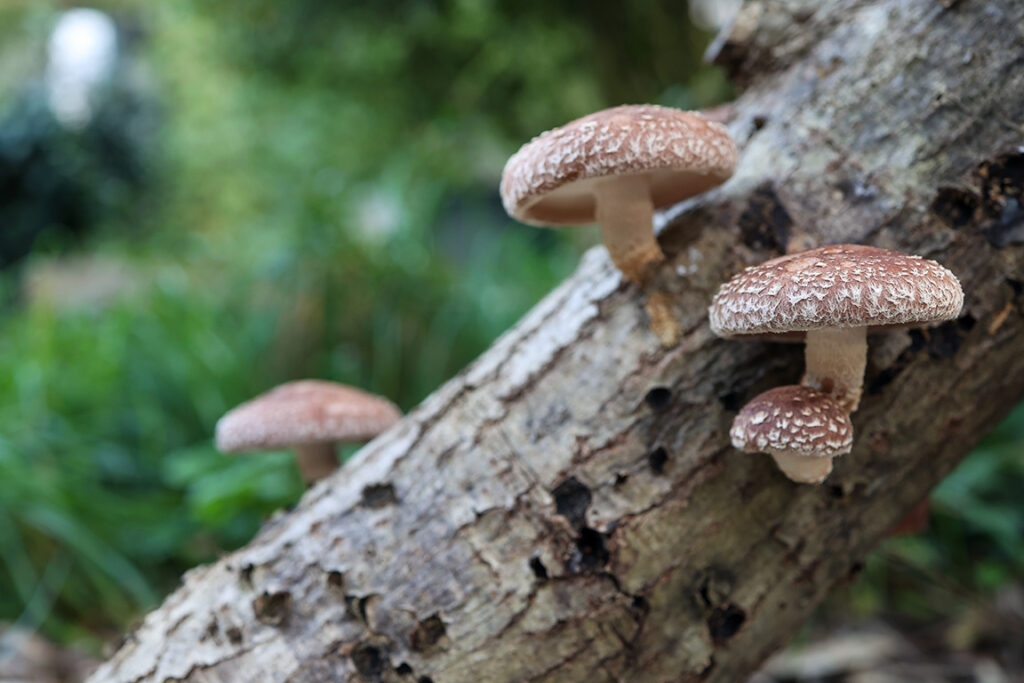
Shiitake is an edible mushroom native to East Asia and one of the world’s most widely cultivated mushrooms. Lentinula edodes has been valued for centuries for its savory flavor, nutritional qualities and place in traditional East Asian food and wellness practices.
Botanical Snapshot
Common Name: Shiitake Mushroom, Shiitake
Scientific Name: Lentinula edodes (Berk.) Pegler
Former Name: Lentinus edodes
Fungal Family: Omphalotaceae
Organism Type: Wood-decaying edible fungus
Native Range: East Asia
Part Commonly Used: Fruiting body; cultivated mycelium and extracts are also used
Traditional Use & Bioactive Compounds
Shiitake has a long history as both food and a traditional wellness mushroom in East Asia.
Its naturally occurring bioactive compounds include polysaccharides, beta-glucans and compounds such as eritadenine. One of its best-studied polysaccharides is lentinan, a beta-glucan isolated from shiitake.
Laboratory and clinical research has explored lentinan and other shiitake-derived compounds for immune and metabolic effects. However, purified lentinan, concentrated extracts and ordinary culinary shiitake are different preparations and should not be considered interchangeable.
Culinary Use & Common Forms
Shiitake has a rich, savory flavor and is widely used fresh or dried in soups, stir-fries, noodle dishes, broths and other foods. Dried mushrooms develop an especially concentrated flavor and are commonly rehydrated before cooking.
Supplemental forms include mushroom powders, capsules and extracts made from the fruiting body, mycelium or both.
Safety & Considerations
Shiitake should be thoroughly cooked before eating. Raw or undercooked shiitake can cause a distinctive, intensely itchy skin reaction known as shiitake dermatitis in susceptible individuals.
Mushroom allergies and digestive discomfort are also possible. Concentrated extracts and supplements may differ substantially from culinary use, so people who are pregnant, breastfeeding, taking medications or managing medical conditions should consult a qualified healthcare professional.
Sourcing & Sustainability
Look for products clearly identified as Lentinula edodes and, for supplements, labels that specify whether they contain fruiting body, mycelium or both.
Shiitake is widely cultivated on hardwood logs and sawdust-based growing media, so commercial cultivation provides abundant supplies without relying heavily on wild harvesting.
Cultural & Traditional Uses
Known as xianggu in China and shiitake in Japan, the mushroom has a long history in East Asian cuisine and cultivation. Its distinctive umami-rich flavor has made it an important ingredient in Chinese, Japanese and other Asian food traditions and, more recently, cuisines around the world.
Related Articles & Resources
Related terms include Beta-Glucan, Polysaccharide, Bioactive Compound and Antioxidant.
For additional research, see the National Library of Medicine article, Recent Advances in Polysaccharides from Lentinus edodes: Isolation, Structures and Bioactivities.
A Note on Herbal Information
The information in this profile is provided for educational purposes and reflects a mix of botanical reference material, historical use, traditional practices and contemporary perspectives. It is not intended to diagnose, treat, cure or prevent disease, and it should not replace advice from a qualified healthcare professional.
Explore More Botanicals
Return to the Botanical Glossary to explore herbs, roots, flowers, spices and other botanicals along with their traditional uses, history, folklore and modern context.
Ancient cultivation. Deep flavor. Remarkable fungus. 🍄