
Marshmallow / Althaea officinalis
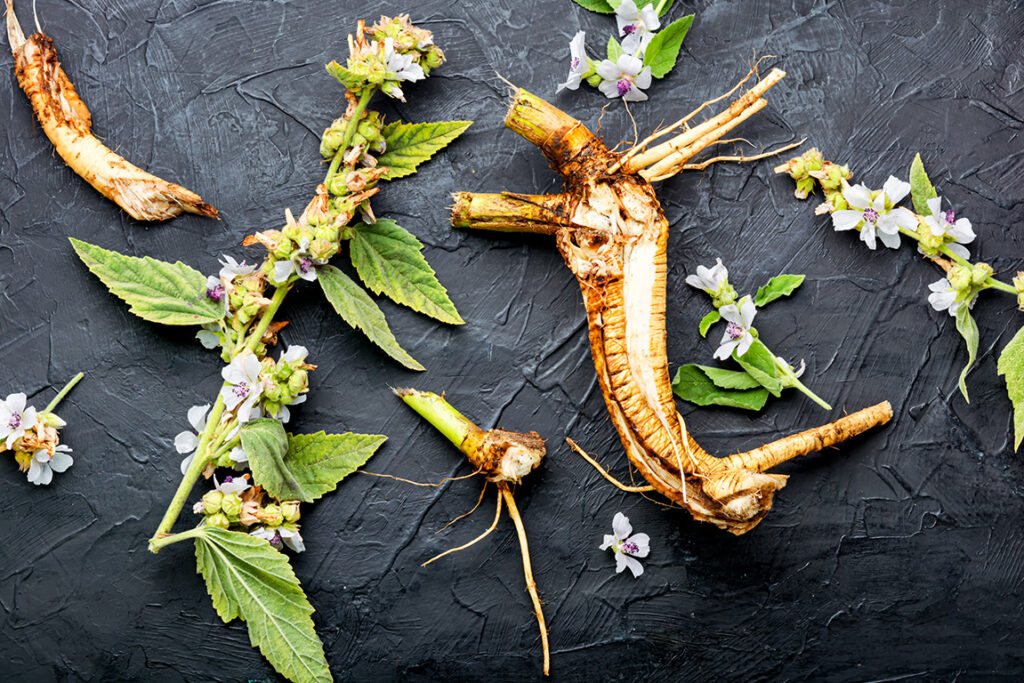
Marshmallow is a perennial member of the mallow family with soft leaves, pale flowers and thick, mucilage-rich roots. Long before the name became associated with the familiar fluffy candy, marshmallow root and leaf were used in traditional herbal preparations for their soothing qualities.
The root is especially rich in mucilage, a group of water-loving polysaccharides that become slippery and gel-like when hydrated. This characteristic explains much of marshmallow’s traditional use for soothing irritated tissues.
Botanical Snapshot
Common Name: Marshmallow, Marsh Mallow
Botanical Name: Althaea officinalis
Plant Family: Malvaceae
Plant Type: Herbaceous perennial
Native Range: Europe through parts of western and central Asia and North Africa
Parts Commonly Used: Root and leaves; root is most commonly used medicinally
Herbal Use & Bioactive Compounds
Marshmallow root has traditionally been used as a demulcent for dry, irritated tissues, particularly the mouth, throat and digestive tract. Its traditional herbal use includes preparations for dry cough, throat irritation and mild digestive discomfort.
The root is especially rich in mucilage, made largely of complex polysaccharides. When hydrated, these compounds form a slippery, gel-like material that helps explain marshmallow’s characteristic soothing properties. The plant also contains flavonoids, phenolic compounds, pectins and other naturally occurring constituents.
Laboratory, animal and limited human research has explored marshmallow for cough and irritated tissues, but clinical evidence remains limited. Much of its modern herbal use continues to be based on longstanding traditional use and the physical properties of its mucilage.
Culinary Use & Common Forms
Dried marshmallow root is commonly prepared as herbal tea, infusion or maceration and may also be used in syrups, tinctures, powders, capsules and herbal blends. The leaves can also be brewed as an herbal infusion, although they contain less mucilage than the root.
Marshmallow has an unusual connection to the familiar confection bearing its name. Earlier versions of marshmallow candy incorporated the mucilaginous root, but modern commercial marshmallows generally use ingredients such as gelatin, sugar and starch instead and contain no marshmallow plant. For more of the story see Smithsonian — Let Us Tell You S’more About America’s Favorite Campfire Treat
Safety & Considerations
Marshmallow root is generally well tolerated in traditional preparations.
Because its mucilage may potentially delay the absorption of medicines taken by mouth, it is prudent to take marshmallow root separately from oral medications. The interaction has not been confirmed in clinical studies, and recommended spacing varies among herbal references. Anyone taking prescription medication should follow the advice of their pharmacist or healthcare professional.
Safety information for medicinal use during pregnancy and breastfeeding is limited. Marshmallow should not be relied on to increase milk production, as that use is not supported by good clinical evidence.
People with known sensitivity to plants in the mallow family should use caution.
Sourcing & Sustainability
Look for products clearly identified as Althaea officinalis, particularly when purchasing dried root. The common names mallow and marsh mallow can also be encountered around related plants in the Malvaceae family, so botanical identification helps prevent confusion.
Marshmallow is cultivated for herbal use and is not generally considered a conservation-sensitive botanical. Quality dried root should come from a reputable supplier and be clean, properly dried and accurately identified.
Spiritual, Magical & Folk Traditions
Marshmallow’s softening and soothing qualities have also influenced its symbolism in contemporary folk and magical practice. It is sometimes associated with healing, protection, peace and gentle emotional work.
The dried herb may appear in sachets, incense blends or ritual preparations intended symbolically to calm conflict, encourage compassion or create a sense of comfort and protection.
Related Articles & Resources
Related terms include Mucilage, Demulcent, Polysaccharide and Maceration.
For a clear overview of traditional uses, available research and safety, see the European Medicines Agency — Marshmallow Root.
For research specifically examining marshmallow and dry cough, see the PubMed review — Marsh Mallow (Althaea officinalis L.) and Its Potency in the Treatment of Cough.
A Note on Herbal Information
The information in this profile is provided for educational purposes and reflects a mix of botanical reference material, historical use, traditional practices and contemporary perspectives. It is not intended to diagnose, treat, cure or prevent disease, and it should not replace advice from a qualified healthcare professional.
Explore More Botanicals
Return to the Botanical Glossary to explore herbs, roots, flowers, spices and other botanicals along with their traditional uses, history, folklore and modern context.
Soft, soothing and rooted in centuries of herbal tradition. 🌿