
Frankincense / Boswellia spp.
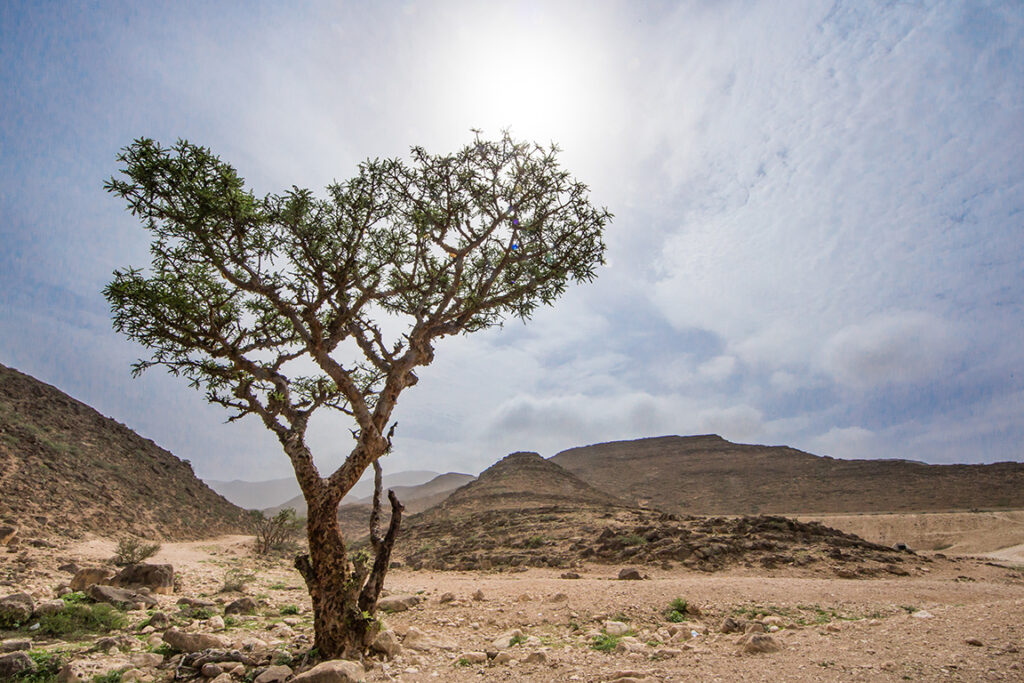
Frankincense, also known as olibanum, is an aromatic oleo-gum-resin obtained from trees in the genus Boswellia. Important sources include Boswellia sacra, Boswellia serrata, Boswellia papyrifera and Boswellia frereana, each producing resin with its own characteristics and regional history.
For thousands of years, frankincense has been valued as incense, perfume material, traditional medicine and an important trade commodity connecting Arabia, East Africa, India and the Mediterranean world.
Botanical Snapshot
Common Name: Frankincense, Olibanum
Botanical Name: Boswellia spp., including Boswellia sacra, B. serrata, B. papyrifera and B. frereana
Plant Family: Burseraceae
Plant Type: Resin-producing trees and shrubs
Native Range: Varies by species; principally the Arabian Peninsula, Horn and eastern regions of Africa, and India
Part Commonly Used: Oleo-gum-resin
Herbal Use & Bioactive Compounds
Frankincense has a long history in traditional medicinal systems, including Ayurveda and traditional practices of Arabia, Africa and parts of Asia. Modern research has focused particularly on extracts of Boswellia serrata for inflammatory conditions such as osteoarthritis, although NCCIH notes that most studies are small or of limited quality and stronger evidence is still needed.
The resin contains numerous naturally occurring compounds, including boswellic acids, diterpenes, triterpenes and volatile terpenes. Boswellic acids are among the most extensively studied constituents, while other compounds such as incensole and incensole acetate have also attracted research interest.
It is worth distinguishing Boswellia resin extracts from frankincense essential oil. They are different preparations with different chemical profiles, so research on standardized resin extracts should not automatically be applied to essential oil or burned incense.
Culinary Use & Common Forms
Frankincense is not primarily used as a culinary botanical. Depending on the species, culture and grade, certain resins have traditionally been chewed or incorporated into regional preparations, but resin sold for incense should not be assumed to be food-grade.
Common forms include resin tears or granules, powdered resin, incense blends, extracts, capsules and frankincense essential oil. Traditional loose resin is commonly placed on heated charcoal or another suitable incense burner to release its distinctive aromatic smoke.
Safety & Considerations
Frankincense products vary significantly by species, preparation and intended use. Incense-grade resin should not be assumed to be appropriate for internal use, and concentrated supplements or extracts should be used according to their specific directions.
Burning frankincense produces smoke and airborne particles, so resin incense is best used with adequate ventilation, particularly around people who are sensitive to smoke or have respiratory conditions.
NCCIH reports that Boswellia serrata extracts have generally been well tolerated in clinical research, but little is known about medicinal-dose use during pregnancy or breastfeeding. Supplements may also interact with medications, making professional guidance appropriate when using concentrated preparations.
Sourcing & Sustainability
Look for frankincense that identifies the Boswellia species and geographic origin whenever possible. Different species produce resins with different aromas, chemistry and traditional uses, and research on commercial supplements has found inconsistent species and ingredient labeling.
Responsible harvesting is especially important because frankincense is generally obtained by making controlled incisions in the bark and collecting the resin that forms afterward. Excessive tapping or insufficient recovery time can weaken trees and contribute to declining populations. Studies of Boswellia papyrifera have found that intensive, continuous tapping can increase tree stress and susceptibility to insect damage.
Choosing traceable, responsibly harvested frankincense helps support both healthy Boswellia populations and the communities whose livelihoods depend upon the resin trade.
Spiritual, Magical & Folk Traditions
Frankincense has been burned ceremonially for thousands of years and is strongly associated with purification, prayer, protection, blessing and sacred space.
It remains an important incense in several religious traditions and is also widely used in contemporary spiritual and metaphysical practices for meditation, cleansing, intention-setting and creating a contemplative atmosphere.
Cultural & Indigenous Uses
Frankincense has played an extraordinary role in the cultures and economies of southern Arabia and East Africa. Oman’s Dhofar region became one of the great historical centers of frankincense production, and its ancient ports and caravan routes formed part of a trade network that carried the resin north toward the Mediterranean and east toward Asia. UNESCO recognizes this history through Oman’s Land of Frankincense World Heritage Site.
The resin has also held important ceremonial roles in Judaism, Christianity and other religious traditions, while Boswellia serrata developed its own medicinal history within Ayurveda in India. Different Boswellia species likewise remain culturally and economically important to communities throughout Somalia, Ethiopia, Eritrea and other resin-producing regions.
Related Articles & Resources
Related glossary terms include Terpene, Volatile Oil, Bioactive Compound and Anti-inflammatory.
For additional information about Boswellia, current research and safety considerations, see National Center for Complementary and Integrative Health — Boswellia: Usefulness and Safety.
A Note on Herbal Information
The information in this profile is provided for educational purposes and reflects a mix of botanical reference material, historical use, traditional practices and contemporary perspectives. It is not intended to diagnose, treat, cure or prevent disease, and it should not replace advice from a qualified healthcare professional.
Explore More Botanicals
Return to the Botanical Glossary to explore herbs, roots, flowers, spices and other botanicals along with their traditional uses, history, folklore and modern context.
Ancient resin, sacred smoke, a fragrance carried across centuries. 🌿