
Nettle Root / Urtica dioica
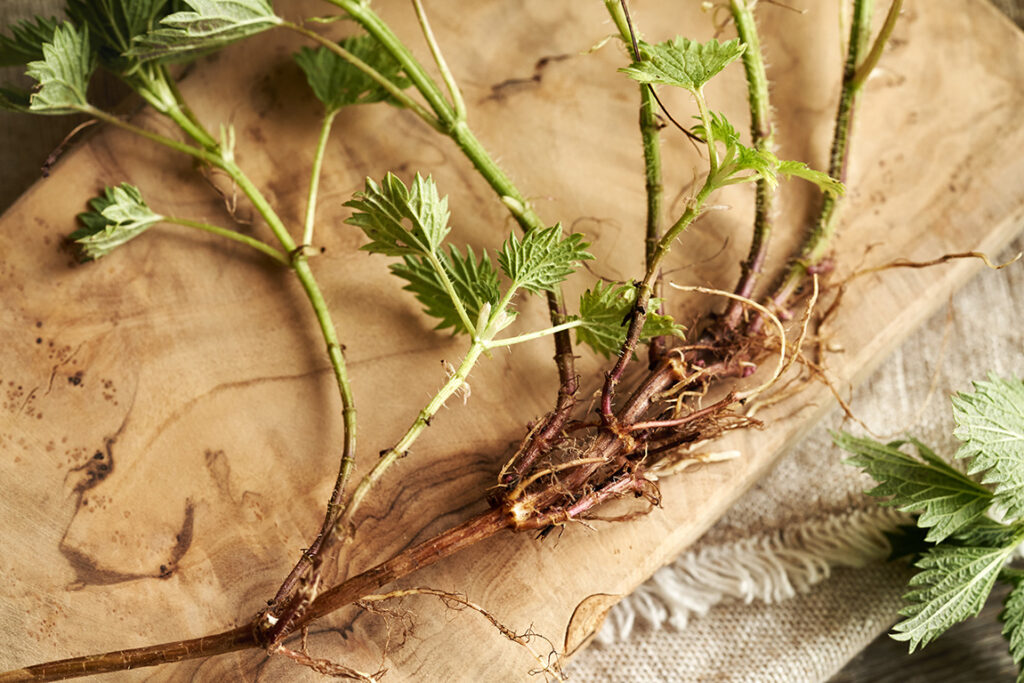
Nettle root comes from the underground roots and rhizomes of stinging nettle, Urtica dioica. Although it comes from the same plant as nettle leaf, the root has a distinctly different herbal history, chemical profile and modern research focus.
Nettle root is best known for its traditional use in preparations for urinary symptoms associated with benign prostatic hyperplasia (BPH), an age-related enlargement of the prostate.
Botanical Snapshot
Common Name: Nettle Root, Stinging Nettle Root
Botanical Name: Urtica dioica
Plant Family: Urticaceae
Plant Type: Herbaceous perennial
Growing Range: Widely distributed throughout temperate regions of Europe, Asia, North America and elsewhere
Part Commonly Used: Roots and rhizomes
Herbal Use & Bioactive Compounds
Nettle root has a history of use for urinary complaints and is particularly associated with lower urinary tract symptoms related to benign prostatic hyperplasia (BPH).
Modern studies have examined nettle root extracts for symptoms such as frequent urination, nighttime urination and difficulty with urinary flow. Some clinical research suggests possible benefit, but the overall evidence remains limited and the exact mechanisms are not fully understood.
Nettle root contains a different mixture of constituents than the leaf, including phytosterols, lignans, polysaccharides, coumarins and lectins such as Urtica dioica agglutinin (UDA). Laboratory research has explored several of these compounds for anti-inflammatory and other biological activity, but laboratory findings do not necessarily translate into proven clinical effects.
Common Forms
Nettle root is typically sold dried for herbal preparations or processed into tinctures, capsules and standardized extracts. Commercial products intended for prostate and urinary support may contain nettle root alone or combine it with botanicals such as saw palmetto.
The root is sometimes prepared as a decoction, although concentrated extracts and tinctures are more common in modern herbal products.
Nettle root should not be substituted automatically for nettle leaf; the two plant parts have different constituents, traditional uses and research profiles.
Safety & Considerations
Nettle root preparations are generally well tolerated, although mild digestive upset may occur.
Urinary frequency, difficulty urinating, weak urinary flow and nighttime urination should not automatically be assumed to result from benign prostate enlargement. Similar symptoms can occur with other urinary or prostate conditions and deserve appropriate medical evaluation, particularly when symptoms are new, worsening or accompanied by pain or blood in the urine.
Anyone using prescription medications or being treated for a prostate or urinary condition should discuss concentrated nettle root preparations with a qualified healthcare professional.
Sourcing & Sustainability
Look for dried root or herbal preparations clearly identified as Urtica dioica. Because nettle leaf and nettle root are marketed for different purposes, the product label should clearly state which plant part is being used.
Stinging nettle grows readily throughout much of its range and is not generally considered threatened by commercial harvesting. Responsible sourcing is still important because harvesting roots removes more of the plant than collecting leaves and can prevent individual plants from regrowing.
Spiritual, Magical & Folk Traditions
Traditional and contemporary spiritual associations generally relate to nettle as a whole plant rather than specifically to its root. Nettle has been associated with protection, strength, resilience and boundaries in European folk practice and modern herbal magic.
For more about these broader traditions, see Nettle Leaf.
Related Articles & Resources
Related botanical: Nettle Leaf.
Related terms include Bioactive Compound, Polysaccharide and Anti-inflammatory.
For a reader-friendly overview of nettle root and research into urinary symptoms associated with benign prostate enlargement, see the National Center for Complementary and Integrative Health — Benign Prostatic Hyperplasia and Complementary and Integrative Approaches: What the Science Says.
For a recent scientific review focused specifically on the root, see the PubMed review — Stinging Nettle (Urtica dioica) Roots: The Power Underground—A Review.
A Note on Herbal Information
The information in this profile is provided for educational purposes and reflects a mix of botanical reference material, historical use, traditional practices and contemporary perspectives. It is not intended to diagnose, treat, cure or prevent disease, and it should not replace advice from a qualified healthcare professional.
Explore More Botanicals
Return to the Botanical Glossary to explore herbs, roots, flowers, spices and other botanicals along with their traditional uses, history, folklore and modern context.
Same resilient nettle, with a very different story underground. 🌿