
Echinacea / Echinacea purpurea
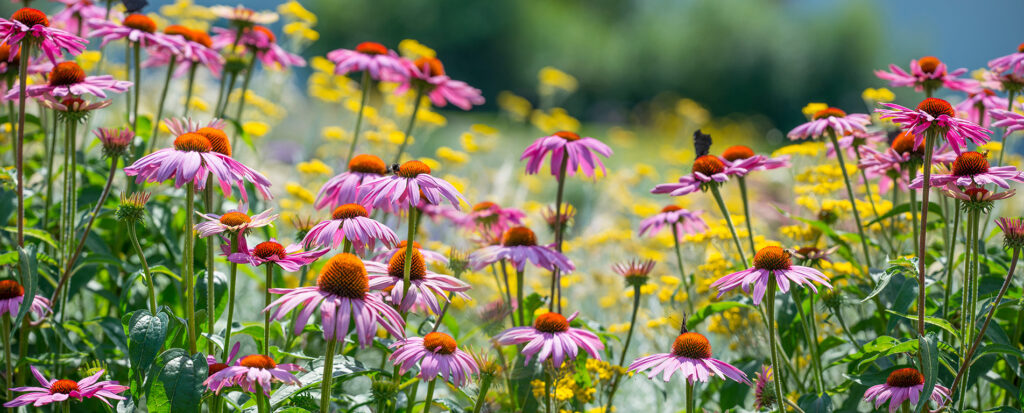
Echinacea, commonly known as purple coneflower, is a North American perennial recognized by its pink-purple petals and prominent cone-shaped flower center. This profile focuses on Echinacea purpurea, one of several Echinacea species used in herbal preparations.
Other commonly used species include Echinacea angustifolia and Echinacea pallida, and herbal products may contain one or more species.
Botanical Snapshot
Common Name: Echinacea, Purple Coneflower
Botanical Name: Echinacea purpurea
Plant Family: Asteraceae
Plant Type: Herbaceous perennial
Native Range: Central and eastern United States
Part Commonly Used: Root and aerial parts
Herbal Use & Bioactive Compounds
Echinacea has a long history of traditional use and is now widely found in herbal products associated with seasonal and respiratory wellness.
Important naturally occurring compounds include alkamides, caffeic acid derivatives such as cichoric acid, polysaccharides, glycoproteins and flavonoids. Their concentrations vary according to the species, plant part and preparation.
Modern research has focused heavily on colds and respiratory infections. Some evidence suggests certain echinacea preparations may slightly reduce the chance of developing a cold, but it remains unclear whether they shorten its duration, and results vary considerably between products.
Culinary Use & Common Forms
Echinacea is used primarily as an herbal botanical rather than an everyday culinary herb.
Common preparations include dried root or aerial parts, teas, tinctures, extracts, capsules and liquid supplements.
Safety & Considerations
Echinacea appears to be generally well tolerated by most adults when used for short periods. Digestive upset may occur, and allergic reactions are possible, particularly in people sensitive to plants in the Asteraceae family, such as ragweed, daisies and chrysanthemums.
Potential interactions with some medications, including immunosuppressants, have been suggested. Safety during pregnancy and breastfeeding has not been fully established.
Sourcing & Sustainability
Because Echinacea purpurea, E. angustifolia and E. pallida are all used commercially, look for products that clearly identify the species and plant part used. Different species and preparations are not necessarily interchangeable.
E. purpurea is widely cultivated, while some other echinacea species have historically been collected from wild populations. Cultivated and responsibly sourced material helps reduce pressure on native stands.
Spiritual, Magical & Folk Traditions
In contemporary folk and magical traditions, echinacea is associated with strength, resilience, protection, vitality and healing intentions.
Its sturdy prairie growth and distinctive flowers have also made it a natural symbol of endurance and the ability to recover after difficult circumstances.
Cultural & Indigenous Uses
Echinacea species have an important history among Indigenous peoples of the North American Great Plains. Much of the best-documented traditional use involves Echinacea angustifolia rather than E. purpurea, including preparations used by Cheyenne, Dakota, Omaha, Pawnee, Ponca and other Plains peoples.
Because different Echinacea species were used by different communities, these traditions should not be treated as though they all refer specifically to E. purpurea.
Related Articles & Resources
Related terms include Bioactive Compound, Polysaccharide, Flavonoid and Antiviral.
National Center for Complementary and Integrative Health (NCCIH): Echinacea: Usefulness and Safety
A Note on Herbal Information
The information in this profile is provided for educational purposes and reflects a mix of botanical reference material, historical use, traditional practices and contemporary perspectives. It is not intended to diagnose, treat, cure or prevent disease, and it should not replace advice from a qualified healthcare professional.
Explore More Botanicals
Return to the Botanical Glossary to discover more herbs, mushrooms, woods, resins and other botanicals currently carried at Crystal by the Sea.
Rooted in resilience. 🌸