
Plantain / Plantago major
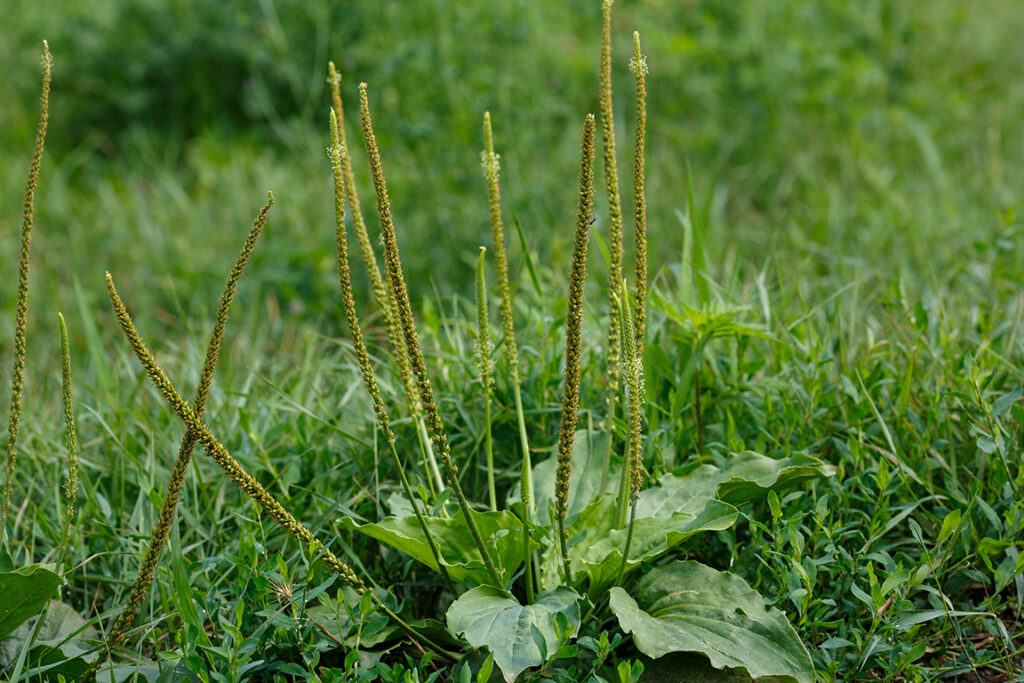
Plantain, or broadleaf plantain, is a low-growing perennial herb commonly found in lawns, paths and disturbed ground. Plantago major has been used for centuries as both a wild food and traditional herbal remedy, particularly in preparations for irritated skin and minor wounds.
This plantain should not be confused with the tropical banana-like fruit also called plantain.
Botanical Snapshot
Common Name: Plantain, Broadleaf Plantain, Greater Plantain
Botanical Name: Plantago major L.
Plant Family: Plantaginaceae
Plant Type: Herbaceous perennial
Native Range: Eurasia; now widely naturalized around the world
Part Commonly Used: Leaves and seeds
Herbal Use & Bioactive Compounds
Plantain leaves have a long history of topical use for minor wounds, bites and irritated skin and have also been used traditionally for digestive and respiratory complaints.
Its naturally occurring bioactive compounds include polysaccharides, flavonoids, iridoid glycosides such as aucubin, and phenolic compounds including plantamajoside and acteoside. The seeds also contain mucilage.
Laboratory and preclinical research has explored wound-healing, anti-inflammatory, antioxidant and antimicrobial activity, but strong human clinical evidence remains limited.
Culinary Use & Common Forms
Young plantain leaves are edible and may be eaten raw or cooked, although older leaves become tougher and more fibrous. The seeds are also edible.
Herbal preparations commonly include dried leaf, tea, tincture and topical preparations such as a poultice.
Safety & Considerations
Plantain is generally considered low-risk when used as food or in typical traditional preparations, although allergic reactions are possible.
Wild-harvested plantain should be collected only from areas free from pesticides, herbicides, roadside pollution and animal contamination. People who are pregnant, breastfeeding, taking medications or considering concentrated extracts should consult a qualified healthcare professional.
Sourcing & Sustainability
Plantago major is widespread and abundant, so sustainability concerns are generally minimal. Accurate identification is still important, particularly when gathering it from the wild.
Avoid harvesting from treated lawns, heavily traveled roadsides or other potentially contaminated areas.
Cultural & Historical Use
Plantain has a long recorded history in European and Middle Eastern herbal traditions. Its use for wounds appears in writings dating back to ancient Greece and continued through Scandinavian, European and Persian herbal practice.
As Europeans carried the plant into new regions, Plantago major became naturalized across much of the world.
Related Articles & Resources
Related terms include Demulcent, Astringent, Mucilage, Polysaccharide and Poultice.
For additional research, see the National Institutes of Health article, The Traditional Uses, Chemical Constituents and Biological Activities of Plantago major L.: A Review.
A Note on Herbal Information
The information in this profile is provided for educational purposes and reflects a mix of botanical reference material, historical use, traditional practices and contemporary perspectives. It is not intended to diagnose, treat, cure or prevent disease, and it should not replace advice from a qualified healthcare professional.
Explore More Botanicals
Return to the Botanical Glossary to explore herbs, roots, flowers, spices and other botanicals along with their traditional uses, history, folklore and modern context.
Humble underfoot. Useful for centuries. 🌿