
Lion’s Mane / Hericium erinaceus
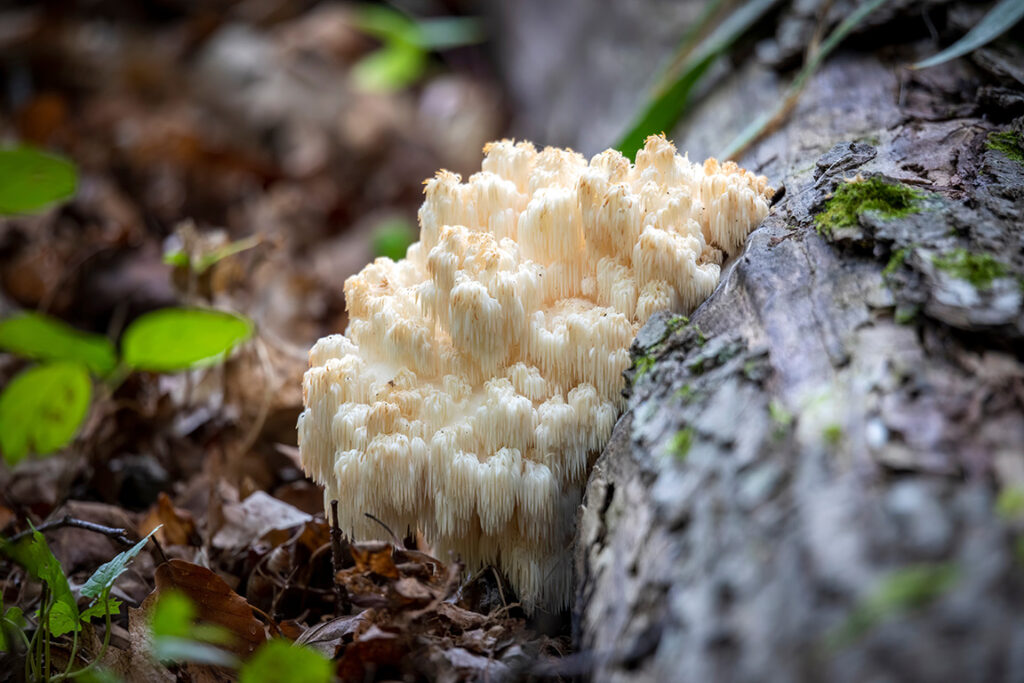
Lion’s mane is an edible mushroom recognized by its distinctive white, cascading spines. Hericium erinaceus grows on hardwood trees in temperate forests and has a long history as both a food and traditional medicinal mushroom in East Asia.
Botanical Snapshot
Common Name: Lion’s Mane, Bearded Tooth Mushroom, Yamabushitake
Scientific Name: Hericium erinaceus (Bull.) Pers.
Fungal Family: Hericiaceae
Organism Type: Edible wood-growing fungus
Distribution: Temperate regions of North America, Europe and Asia
Part Commonly Used: Fruiting body and cultivated mycelium
Traditional Use & Bioactive Compounds
Lion’s mane has traditionally been used in Chinese and other East Asian practices, particularly in connection with digestive health and general nourishment.
Its naturally occurring bioactive compounds include polysaccharides, beta-glucans, hericenones and erinacines. Hericenones and erinacines have received particular research attention for their potential influence on nerve growth factor and other processes involved in nervous-system function.
Laboratory, animal and small human studies have explored lion’s mane in relation to cognition, mood and neurological health. Results are promising in some areas, but human clinical evidence remains limited and does not establish lion’s mane as a treatment for neurological disease.
Culinary Use & Common Forms
Lion’s mane is an edible mushroom with a tender texture and mild flavor sometimes compared with seafood. It may be sautéed, roasted or incorporated into soups and other dishes.
Supplemental forms include dried mushroom, powders, capsules and extracts made from the fruiting body, mycelium or both.
Safety & Considerations
Lion’s mane is generally well tolerated as a food, although mushroom allergies and mild digestive discomfort are possible.
Supplement products vary in species verification, preparation and concentration. People who are pregnant, breastfeeding, taking medications or managing medical conditions should discuss concentrated mushroom products with a qualified healthcare professional.
Sourcing & Sustainability
Look for products clearly identified as Hericium erinaceus and for labels that specify whether the product contains fruiting body, mycelium or both. These materials are not chemically identical, and extraction methods can also affect the compounds present in the finished product.
Cultivated lion’s mane is widely available and provides an alternative to harvesting wild mushrooms.
Cultural & Traditional Uses
Known as Houtou in China and Yamabushitake in Japan, lion’s mane has long been valued in East Asia as both food and a traditional medicinal mushroom. Its distinctive appearance and culinary qualities continue to make it an important cultivated mushroom throughout the region.
Related Articles & Resources
Related terms include Beta-Glucan, Polysaccharide, Bioactive Compound, Antioxidant and Nootropic.
For additional research, see the National Institutes of Health article, Benefits, Side Effects, and Uses of Hericium erinaceus as a Supplement: A Systematic Review.
A Note on Herbal Information
The information in this profile is provided for educational purposes and reflects a mix of botanical reference material, historical use, traditional practices and contemporary perspectives. It is not intended to diagnose, treat, cure or prevent disease, and it should not replace advice from a qualified healthcare professional.
Explore More Botanicals
Return to the Botanical Glossary to explore herbs, roots, flowers, spices and other botanicals along with their traditional uses, history, folklore and modern context.
Wild-looking mushroom. Fascinating modern research. 🍄