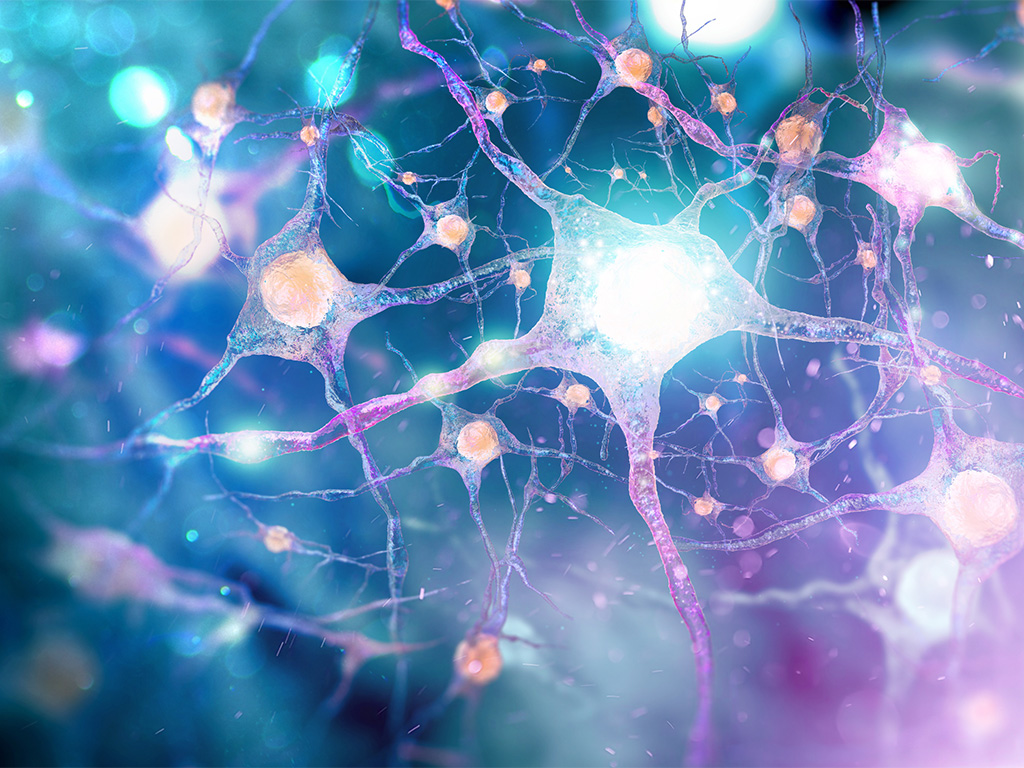
Your Nervous System is Listening
What Stress Really Does to the Body—and What Actually Helps
By Catherine Costello
Stress has a reputation problem.
We often talk about it as though it is something our bodies should never experience—as if a perfectly healthy human being should float peacefully through life while deadlines, traffic, family drama, financial surprises and assorted everyday nonsense bounce harmlessly away.
That is not how the human body was designed.
Stress is a normal biological response to challenge. In the short term, it can sharpen attention, increase energy and help us react quickly when something needs our immediate attention. The problem is not that the stress response exists. The problem begins when that response is activated too often, lasts too long, or rarely gets the opportunity to settle back down.
And that is where the nervous system enters the conversation.
What Actually Happens When We Feel Stressed?
Imagine you are driving when another car suddenly pulls into your lane.
Before you have time to calmly evaluate the situation, your body is already responding.
Your heart beats faster. Your breathing changes. Your muscles tighten. Your attention snaps toward the threat.
This is part of the body’s stress response, often described as “fight or flight.”
The brain and body communicate through several overlapping systems, including the autonomic nervous system and hormone pathways involved in the stress response. Stress hormones help increase alertness and prepare the body to respond quickly. Heart rate and breathing can rise, muscles become ready for action, and energy becomes more immediately available.
For the car-in-your-lane situation, this is brilliant biology.
You do not want your body saying:
Interesting. Let us carefully consider all available options.
You want:
BRAKE. NOW.
Short-term stress can also help us meet a deadline, compete in a sport, respond to an emergency or push through a temporarily demanding situation. Stress itself is not inherently harmful.
The trouble comes when the emergency response begins behaving as though everything is an emergency.
Acute Stress Versus Chronic Stress
Acute stress is temporary.
The stressful event happens, the body responds, the situation passes, and the system gradually returns toward its usual state.
Chronic stress lasts much longer—weeks, months or even years. It can come from continuing financial pressure, caregiving, difficult relationships, workplace stress, health concerns or simply a long accumulation of demands without enough recovery time.
Researchers sometimes use the term allostatic load to describe the cumulative physiological “wear and tear” associated with repeatedly adapting to stress over time. The concept recognizes that stress involves much more than one hormone or one organ; cardiovascular, hormonal, immune, metabolic and nervous-system processes can all be involved.
In other words, our bodies are remarkably good at adapting.
But adaptation still has a cost when there is never much opportunity to recover.
Stress Does Not Always Feel Like “Stress”
One reason chronic stress can be tricky is that it does not necessarily announce itself with flashing lights and a sign reading:
YOUR NERVOUS SYSTEM IS OVERLOADED.
- difficulty concentrating
- restless or disrupted sleep
- headaches
- muscle tension
- stomach or digestive problems
- changes in appetite
- irritability
- low energy
- feeling constantly “on edge”
- trouble making decisions
- feeling exhausted while somehow still unable to relax
CDC and NIH resources both recognize sleep problems, difficulty concentrating, digestive complaints, headaches, body aches and changes in energy among the ways prolonged stress can show up.
Of course, those symptoms can have many causes, which is why persistent or concerning symptoms should not automatically be blamed on stress.
Sometimes stress is part of the picture.
Sometimes it is not.
Bodies are complicated little beasts.
Regulation Is Not the Same as “Calm Down”
Here is where wellness language occasionally gets ahead of the science.
You may hear people talk about “regulating the nervous system.”
It can sound as though the goal is to flip a switch and remain permanently serene.
That is not realistic—and it would not even be particularly useful.
A healthy nervous system needs to be able to activate when action is required and settle when the demand has passed.
You want your heart rate to increase when you run.
You want alertness when something dangerous happens.
You want energy when you need to act.
The goal is not permanent calm.
The better goal is flexibility and recovery.
The parasympathetic branch of the autonomic nervous system participates in many of the body’s resting and restorative processes, while the sympathetic branch plays an important role in mobilizing the body during challenge. These systems continually interact rather than operating as simple ON/OFF buttons.
So when someone is stressed, telling them:
“Just calm down.”
is rarely the neurological revelation we imagine it to be.
If calm were available on command, they probably would have selected it already.
What Actually Helps?
There is no single “nervous-system reset” that works for everyone.
But there are several remarkably ordinary practices that have reasonable evidence behind them.
And, inconveniently for anyone hoping to sell us a $497 miracle program, many of them are free.
1. Slow Down the Breathing
Breathing is unusual because it happens automatically, yet we can also deliberately change it.
Slow, controlled breathing is frequently used in relaxation practices. Research reviewed by the National Center for Complementary and Integrative Health suggests slow diaphragmatic breathing may modestly lower blood pressure and cortisol and may help reduce perceived stress.
This does not require turning yourself into a meditation master.
Sometimes a few minutes of comfortably slower breathing is enough to create a pause between reacting and responding.
And no, there is no sacred breathing number everyone must obey.
Comfort matters.
2. Move Your Body
Exercise is often discussed in terms of weight, muscles or cardiovascular health, but movement also interacts with the stress response.
A 2024 systematic review of 31 studies involving 1,386 adults found that a session of acute exercise was associated with reductions in some measures of physiological stress reactivity, including blood pressure and cortisol responses, although effects varied depending on what researchers measured.
Movement does not have to mean punishment disguised as fitness.
Walking counts.
Stretching counts.
Gardening counts.
Paddling, dancing, swimming and wandering around looking for rocks absolutely count.
The best form of movement is generally one you will actually continue doing.
3. Protect Your Sleep
Stress and sleep have an especially irritating relationship.
Stress can interfere with sleep, and insufficient sleep can make the next day’s demands feel even harder to handle.
Good sleep habits are not glamorous, but the basics matter: a relatively consistent sleep schedule, a cool and dark sleeping environment, reduced bright light before bedtime, regular daytime activity and enough time actually reserved for sleep. NIH guidance also recommends spending time outdoors when possible.
Light matters because our internal biological clocks use environmental light as an important timing signal. Circadian rhythms influence sleep as well as hormone release, appetite, digestion and other body processes.
Sometimes supporting the nervous system looks suspiciously like going to bed.
4. Let Other Humans Help
We are extraordinarily social animals—even those of us who occasionally become convinced that moving into the woods with the squirrels would simplify everything.
Supportive relationships can provide emotional and practical resources during stressful periods.
CDC notes that meaningful social connection is associated with improved ability to manage stress and with better overall well-being and sleep.
That does not mean you need fifty friends.
Sometimes regulation looks like calling the one person who makes you feel safe enough to say:
“Today was ridiculous.”
And hearing:
“Yep. Tell me about it.”
5. Go Outside
There is growing interest in the relationship between natural environments and mental well-being.
Some studies report reductions in stress measures following nature exposure, although the research is not nearly strong enough to treat “nature therapy” as a replacement for professional care. A 2024 systematic review found some encouraging stress-related findings but described the overall evidence as limited.
That distinction matters.
Spending twenty minutes under a tree is not medicine for every problem.
But if sitting near the water, walking through the woods, gardening or watching clouds helps your body shift out of high alert for a little while?
There is certainly no need to apologize for that.
Small Signals of Safety Matter
One interesting way to think about stress management is that we are not necessarily trying to force calm.
We are creating conditions that make recovery easier.
A slower breath.
A walk.
Regular meals.
Enough sleep.
A familiar routine.
Morning light.
A conversation with someone trustworthy.
Five quiet minutes without a notification demanding something.
None of these is dramatic.
That may be precisely the point.
Stress often accumulates through hundreds of small demands.
Recovery can accumulate through small moments too.
Why One Technique Does Not Work for Everyone
Human nervous systems are not identical.
People differ in temperament, health, life history, environment, sleep, hormones, medications, responsibilities and the kinds of stress they are experiencing.
One person may find meditation deeply relaxing.
Another may sit there thinking:
Excellent. Now I can hear ALL my thoughts.
One person regulates beautifully through stillness.
Another needs movement.
Someone else may need conversation, music, gardening, structure, creative work, therapy or simply fewer things on the calendar.
Stress management is often less about discovering the technique and more about building a collection of tools.
That also means there is no moral failure in needing professional support.
When Self-Care Is Not Enough
Breathing exercises and walks are useful tools.
They are not substitutes for medical or mental-health care when something more serious is happening.
If stress is persistent, overwhelming, interfering with normal daily life, affecting sleep or eating for an extended period, or accompanied by significant changes in mood or functioning, it is worth talking with an appropriate healthcare professional.
Sometimes the healthiest nervous-system strategy is not another wellness hack.
Sometimes it is getting help.
Your Nervous System Is Not the Enemy
The stress response is not evidence that your body is malfunctioning.
Quite the opposite.
It is an ancient protective system trying to help you meet the demands placed in front of you.
The challenge of modern life is that many of our “threats” do not end after thirty seconds.
The email remains.
The bills remain.
The caregiving continues.
The calendar somehow breeds overnight.
So perhaps the goal is not to achieve some mythical state of permanent calm.
Perhaps it is to become better at noticing when our systems have been working overtime—and deliberately giving them opportunities to recover.
Move.
Rest.
Breathe.
Sleep.
Find daylight.
Go outside.
Talk to somebody.
Remove a demand when you can.
And remember that being well does not mean never becoming stressed.
It means having ways to find your way back. 🌿
Sources & Further Reading
Paredes-Céspedes, D. M., et al. (2024). The Effects of Nature Exposure Therapies on Stress, Depression, and Anxiety Levels: A Systematic Review. European Journal of Investigation in Health, Psychology and Education, 14(3), 609–622. DOI: 10.3390/ejihpe14030040.
Centers for Disease Control and Prevention. Managing Stress. Mental Health. Updated May 12, 2026.
National Center for Complementary and Integrative Health. Stress. National Institutes of Health.
National Center for Complementary and Integrative Health. Relaxation Techniques: What You Need to Know. National Institutes of Health.
MedlinePlus. Stress. U.S. National Library of Medicine / National Institutes of Health.
Morava, A., Dillon, K., Sui, W., Alushaj, E., & Prapavessis, H. (2024). The effects of acute exercise on stress reactivity assessed via a multidimensional approach: A systematic review. Journal of Behavioral Medicine, 47(4), 545–565. DOI: 10.1007/s10865-024-00470-w.
National Heart, Lung, and Blood Institute. Healthy Sleep Habits. National Institutes of Health.
National Institute of General Medical Sciences. Circadian Rhythms. National Institutes of Health.
Centers for Disease Control and Prevention. Social Connection. National Center for Chronic Disease Prevention and Health Promotion.
A Note on Educational Information
The information shared in Tools to Heal Your World is intended for educational and informational purposes only. Contributors share their own research, knowledge, experience, and perspectives. Nothing presented here is intended to diagnose, treat, cure, or prevent any condition, or to replace guidance from a qualified professional.

Catherine Costello
Curious Generalist • Research-Driven Writer • Life Long Learner • Rock Hound
Small-business owner, creative, rock hound, and unapologetically curious generalist, Cat follows interesting questions wherever they lead. Her research-driven articles explore everything from herbs, geology, and science to history, folklore, spirituality, and the occasional irresistible rabbit hole.