
Ashwagandha / Withania somnifera
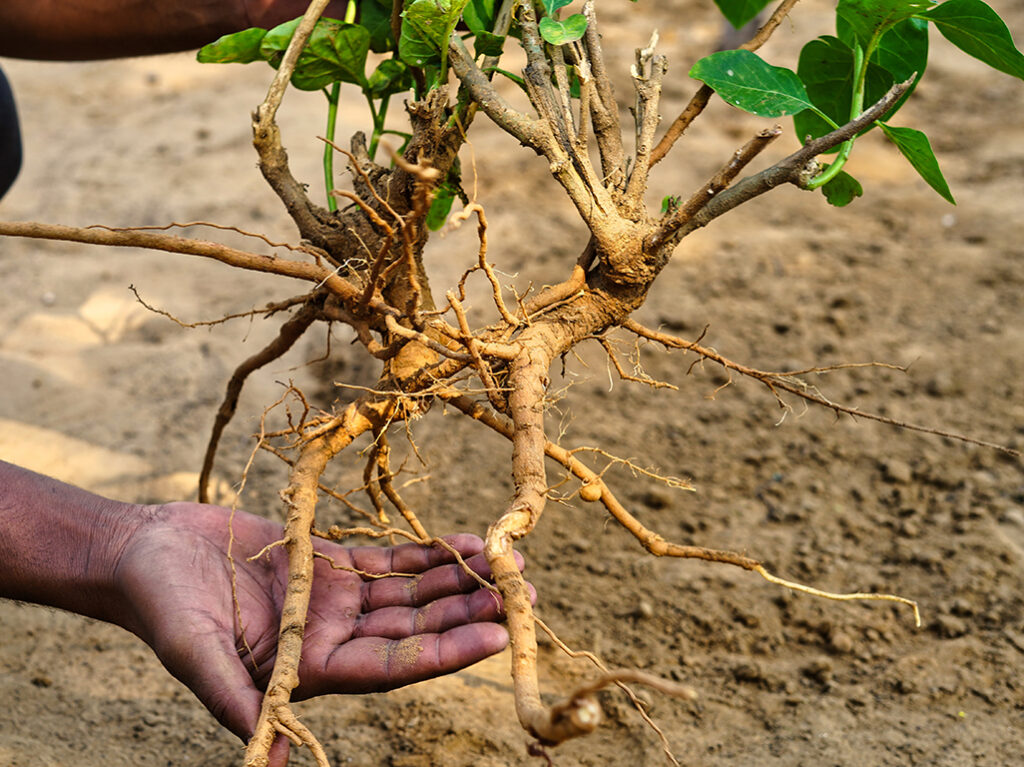
Ashwagandha (Withania somnifera) is a small evergreen shrub with a long history of use in Ayurveda, the traditional medical system of India. Its root has traditionally been used as a restorative tonic and is classified in Ayurveda as a rasayana, a broad category associated with rejuvenation, vitality and resilience.
Today, ashwagandha is widely marketed as an adaptogen, particularly for stress and sleep. Modern research has explored some of these uses, although evidence varies considerably by preparation and health claim.
Botanical Snapshot
Common Name: Ashwagandha, Winter Cherry, Indian Ginseng
Botanical Name: Withania somnifera
Plant Family: Solanaceae
Plant Type: Evergreen shrub or subshrub
Native Range: Parts of southern Europe, Africa, the Middle East and Asia
Part Commonly Used: Root; leaves are also used in some extracts
Herbal Use & Bioactive Compounds
Ashwagandha root has a long history of use in Ayurvedic and Unani traditions as a tonic associated with strength, vitality and resilience. The modern term adaptogen is much newer and should not be treated as interchangeable with its traditional Ayurvedic classification as a rasayana.
Ashwagandha contains numerous naturally occurring compounds, including withanolides, a group of steroidal lactones, as well as alkaloids and other phytochemicals. Small, short-term clinical studies suggest that some ashwagandha preparations may help with stress and sleep, but different studies have used different extracts and doses, and evidence for many other promoted benefits remains limited or unclear.
Culinary Use & Common Forms
Ashwagandha is not commonly used as an everyday culinary herb. Traditionally, the powdered root may be combined with milk, ghee or other ingredients in Ayurvedic preparations.
Modern products are commonly available as powders, capsules, tinctures and standardized extracts. Root-only and root-and-leaf extracts are not necessarily equivalent because their chemical composition can differ.
Safety & Considerations
Ashwagandha appears to be generally well tolerated during short-term use, but its long-term safety has not been established. Possible effects include stomach upset, diarrhea, nausea and drowsiness. Rare cases of liver injury associated with ashwagandha supplements have also been reported.
Ashwagandha should be avoided during pregnancy and breastfeeding and may be inappropriate for people with thyroid or autoimmune disorders or those preparing for surgery. It may interact with medications for diabetes or high blood pressure, thyroid hormone, sedatives, anticonvulsants and immunosuppressants.
Sourcing & Sustainability
Look for products that clearly identify Withania somnifera, specify whether the root, leaf or both are used, and provide information about extraction or standardization when applicable. Reputable sourcing and independent quality testing are especially useful with concentrated herbal supplements.
Cultural & Indigenous Uses
Ashwagandha has an important place within Ayurveda, a traditional medical system that developed in South Asia. It has historically been classified as a rasayana, a category of preparations associated with restoration, vitality and longevity.
This traditional framework predates the modern Western concept of the “adaptogen,” so the two terms should not be treated as exact equivalents.
Related Articles & Resources
Related terms include Adaptogen, Rasayana, Tonic and Bioactive Compound.
For additional research-based information, visit the National Center for Complementary and Integrative Health — Ashwagandha.
A Note on Herbal Information
The information in this profile is provided for educational purposes and reflects a mix of botanical reference material, historical use, traditional practices and contemporary perspectives. It is not intended to diagnose, treat, cure or prevent disease, and it should not replace advice from a qualified healthcare professional.
Explore More Botanicals
Return to the Botanical Glossary to discover more herbs, mushrooms, woods, resins and other botanicals currently carried at Crystal by the Sea.
Rooted in tradition. Resilient by nature. 🌿